

Quick Answer
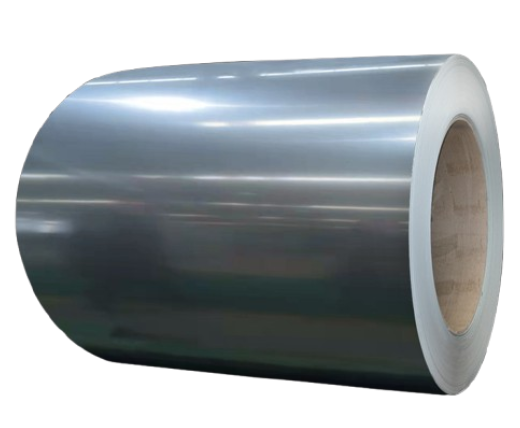
Pre-painted stainless steel consists of a stainless steel substrate combined with a surface coating system, which may include a pretreatment layer, primer, and decorative or protective topcoat. Stainless steel is an iron-based alloy containing at least 10.5% chromium. The presence of other alloying elements such as nickel, molybdenum, manganese, silicon, and nitrogen varies according to the selected grade. For example, ASTM A240 specifies the chemical composition requirements for numerous chromium, chromium-nickel and chromium-manganese-nickel stainless steels.
Therefore, it is not the ‘painted’ part that makes the material stainless. Instead, it is the stainless steel substrate that provides the inherent corrosion resistance and mechanical properties, while the coating system adds colour, texture, additional surface protection and architectural design possibilities. In industrial production, pre-painted stainless steel is manufactured by cleaning and treating the stainless steel surface before applying one or more organic coating layers under controlled conditions. Woda describes its pre-painted stainless steel as stainless steel substrates with specialised coatings for plain colours and decorative patterns.
What Is Pre-Painted Stainless Steel?
To understand what pre-painted stainless steel is made of, it helps to separate the material into its two main components: the stainless steel substrate and the surface coating. Unlike ordinary painted carbon steel, the substrate is a corrosion-resistant alloy in itself, while the paint or decorative finish is added afterwards to alter its appearance and provide extra functionality for the surface.
Stainless steel is an iron-based alloy whose corrosion resistance primarily comes from chromium. Chromium enables the formation of a very thin, adherent passive oxide film on the surface that can reform when exposed to oxygen. Other alloying elements are then used to modify properties such as corrosion resistance, strength, formability, weldability, and resistance to specific chemical environments.
The coating does not replace this passive layer. Instead, it creates an additional barrier between the stainless steel surface and the surrounding environment. This distinction is important when evaluating pre-painted stainless steel, as the performance of the finished product depends on the grade of the steel and the coating system used.
What Is the Stainless Steel Substrate Made Of?
The base material is usually a flat stainless steel sheet or coil. However, there is no single chemical formula for stainless steel. Different grades contain different proportions of elements such as chromium, nickel, molybdenum, manganese, silicon, carbon and nitrogen.
ASTM A240 illustrates this variation clearly. Its chemical composition tables cover a broad range of stainless steel grades, including austenitic chromium-nickel, chromium-manganese-nickel and speciality alloys with significant additions of molybdenum, nitrogen and copper.
For instance, a typical 304-type austenitic stainless steel is primarily composed of iron, chromium and nickel, whereas a 316-type grade contains additional molybdenum to enhance its resistance to chloride-containing environments. A ferritic grade such as 430 relies more heavily on chromium, lacking the characteristic nickel content of common austenitic grades.
Therefore, asking ‘What is pre-painted stainless steel made of?’ without specifying the grade is incomplete. Two pre-painted stainless steel products may appear identical yet have different substrate chemistry, resulting in varying corrosion resistance, forming characteristics, and cost.
The Main Chemical Elements in Stainless Steel
Although the exact composition varies by grade, several elements appear repeatedly in stainless steel specifications.
Iron (Fe) forms the primary metallic base. It provides the alloy’s structural framework, while other elements modify its microstructure and performance.
Chromium (Cr) is the defining alloying element of stainless steel because it promotes the formation of the passive surface film that is responsible for much of its corrosion resistance. Consequently, the amount of chromium is one of the first chemical characteristics that engineers examine when selecting a stainless steel grade.
Nickel (Ni) is especially important in many austenitic stainless steels. It stabilises the austenitic structure and contributes to toughness, ductility, and corrosion performance.
Molybdenum (Mo) is used in certain grades to enhance resistance to localised corrosion, particularly pitting and crevice corrosion, in chloride-containing environments. This is one reason why 316-type stainless steel is commonly used in more aggressive environments than basic 304-type stainless steel.
The levels of manganese (Mn), silicon (Si), carbon (C), and nitrogen (N), among other elements, are controlled in order to achieve specific metallurgical and processing characteristics. ASTM A240 shows how these limits can vary substantially from one grade to another.
What Is the Paint Layer Made Of?
The second major component of pre-painted stainless steel is the organic coating system. The exact formulation varies according to the manufacturer, application, required durability, and desired appearance, so “paint” should not be interpreted as a single universal chemical.
A typical industrial coating system may contain a combination of:
- Surface pretreatment
- Primer
- Pigmented topcoat
- Optional clear or protective finish
The pretreatment prepares the stainless steel surface so that subsequent coatings can establish reliable adhesion. The primer provides an intermediate bonding and protective layer, while the topcoat determines much of the visible color, gloss, texture, and surface resistance.
Depending on the intended application, the coating chemistry may be based on polyester, modified polyester, polyurethane, PVDF, or another specialized resin system. Pigments and additives are incorporated into the coating to produce different colors, gloss levels, textures, and functional properties.
This layered construction is one reason pre-painted stainless steel can offer a significantly wider visual range than untreated stainless steel while retaining the underlying properties of the metal substrate.
What Does the Complete Structure of Pre-Painted Stainless Steel Look Like?
The finished product can be understood as a multilayer material rather than simply “painted metal.”
A simplified cross-section is:
Stainless steel substrate → surface pretreatment → primer → colored/topcoat → optional protective finish
Not every product necessarily contains every layer, and coating thickness and chemistry vary according to the product specification. Some decorative products may emphasize color and texture, while products designed for harsh environments may place greater emphasis on adhesion, chemical resistance, UV stability, and scratch resistance.
This layered structure also explains why surface preparation is so important. Stainless steel has a relatively stable passive surface, and the coating system must be engineered to achieve consistent adhesion without compromising the substrate.
Why Is Stainless Steel Painted If Stainless Steel Is Already Corrosion Resistant?
This is one of the most common questions about pre-painted stainless steel. The answer is that corrosion resistance is just one aspect of a material’s value.
While untreated stainless steel provides a metallic appearance, architects and manufacturers may require colours, wood effects, stone effects, matte surfaces, metallic finishes, or other decorative effects. Painting enables stainless steel to be incorporated into architectural designs that would be challenging to achieve using conventional mill finishes.
Depending on its chemistry and formulation, the coating can also provide additional resistance to certain forms of surface contamination, scratching, or environmental exposure. In architectural applications, therefore, it can serve both an aesthetic and a functional role.
It is important to note that the coating is an additional performance layer, rather than being the primary reason the substrate qualifies as stainless steel.
Which Stainless Steel Grades Can Be Pre-Painted?
Several stainless steel grades can potentially be used as the substrate for a pre-painted product, provided that the surface preparation and coating system are appropriately designed.
- 304 Stainless Steel
304 is one of the most widely recognized austenitic stainless steel grades. Its combination of corrosion resistance, formability, availability, and relatively broad application range makes it a common reference point for decorative and architectural stainless products.
For interior wall panels, ceilings, decorative components, and many architectural applications, a 304-based substrate can provide a practical balance between material performance and cost.
- 316 Stainless Steel
316 stainless steel contains molybdenum in addition to chromium and nickel, giving it enhanced resistance to certain chloride-containing environments. This makes it particularly relevant to coastal architecture, marine-adjacent projects, chemical environments, and other applications where localized corrosion is a greater concern.
Painting 316 stainless steel can provide additional design flexibility without changing the fundamental reason the grade was selected.
- Ferritic Stainless Steel
Ferritic stainless steels, including 430-type materials, are chromium-based alloys with a different metallurgical structure from common austenitic grades. They are often used where moderate corrosion resistance, appearance, magnetic behavior, and cost are important considerations.
Whether a ferritic grade is appropriate for pre-painting depends on the intended environment, forming requirements, and coating specification.
| Stainless Steel Substrate | General Characteristics | Typical Reason for Selection | Consideration for Pre-Painted Applications |
| 304 | Austenitic Cr-Ni stainless steel | Good general corrosion resistance and formability | Common choice for architectural applications |
| 316 | Austenitic Cr-Ni-Mo stainless steel | Improved resistance in many chloride environments | Useful for coastal or more aggressive exposure |
| 430 | Ferritic Cr stainless steel | Cost-effective corrosion resistance and appearance | Suitable for selected interior and decorative uses |
| 201 | Austenitic Cr-Mn-Ni stainless steel | Lower-nickel alternative for selected applications | Environmental and forming requirements should be evaluated carefully |
| Specialty Grades | Customized alloy chemistry | Specific corrosion, strength, or temperature requirements | Coating system should be matched to the substrate |
The exact chemical limits should always be confirmed against the applicable material standard and purchase specification rather than inferred from the grade name alone. ASTM A240 provides chemical and mechanical requirements for many stainless steel sheet, plate, and strip grades.
What Is the Role of Surface Pretreatment?
Pretreatment involves preparing the metallic substrate for the organic coating system. Its purpose is to prepare the surface for consistent coating adhesion and long-term performance.
Before coating, the stainless steel must be clean and free from oil, grease, dust, processing residues, and other contaminants. Depending on the coating technology used, additional chemical or mechanical treatment may be employed to prepare the surface for the primer.
This step is important because coating failure does not necessarily indicate failure of the stainless steel substrate itself. If the coating loses adhesion, peels, or develops defects, the problem may originate at the coating-substrate interface rather than in the chemistry of the stainless steel.
This is why, for industrial buyers, coating specifications should include more than a colour reference. Surface preparation, the coating system used, the thickness of the coating, adhesion requirements, and durability testing can all affect the finished product.
What Is the Primer Made Of?
A primer is the intermediate coating that connects the prepared stainless steel surface with the final decorative coating. Its exact composition depends on the overall coating system, but it generally contains a resin or binder, pigments or functional additives, solvents or water depending on the formulation, and other components needed for application and curing.
The primer’s main purpose is not necessarily to provide the final color. Instead, it can improve adhesion, create a uniform surface for the topcoat, and contribute to corrosion or chemical resistance.
In a high-quality pre-painted stainless steel system, the primer and topcoat should be considered as a matched pair. A visually attractive topcoat cannot compensate indefinitely for poor adhesion at the substrate-primer interface.
What Is the Topcoat Made Of?
The topcoat is the layer that users normally see. It contains the resin or binder that is responsible for film formation, as well as pigments that provide colour and additives that modify characteristics such as gloss, UV resistance, flexibility, hardness, and surface behaviour.
Common coating types for pre-painted metal products include polyester and modified polyester systems, polyurethane-based coatings, and fluoropolymer-based systems, such as PVDF. The most suitable system depends on whether the priority is interior decoration, exterior weather resistance, colour retention, scratch resistance, chemical exposure, or another performance requirement.
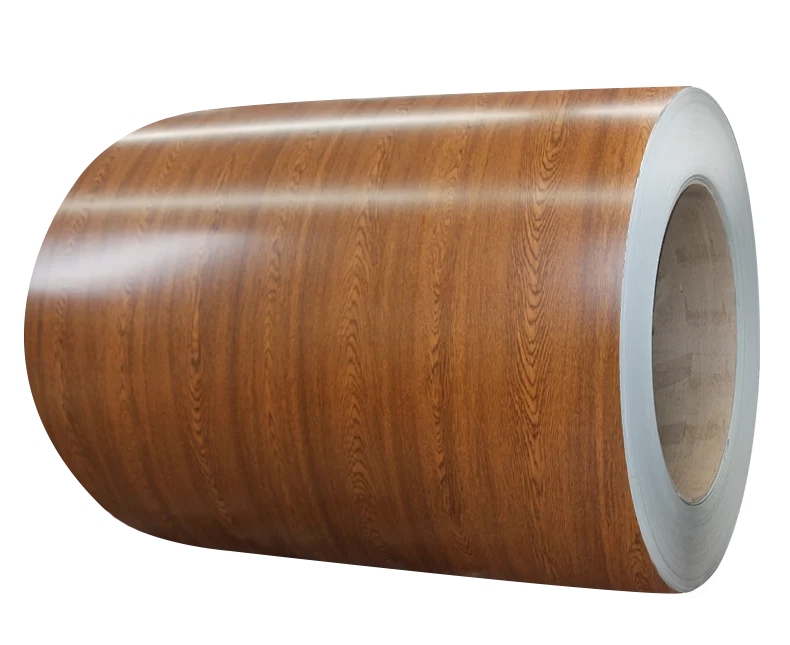
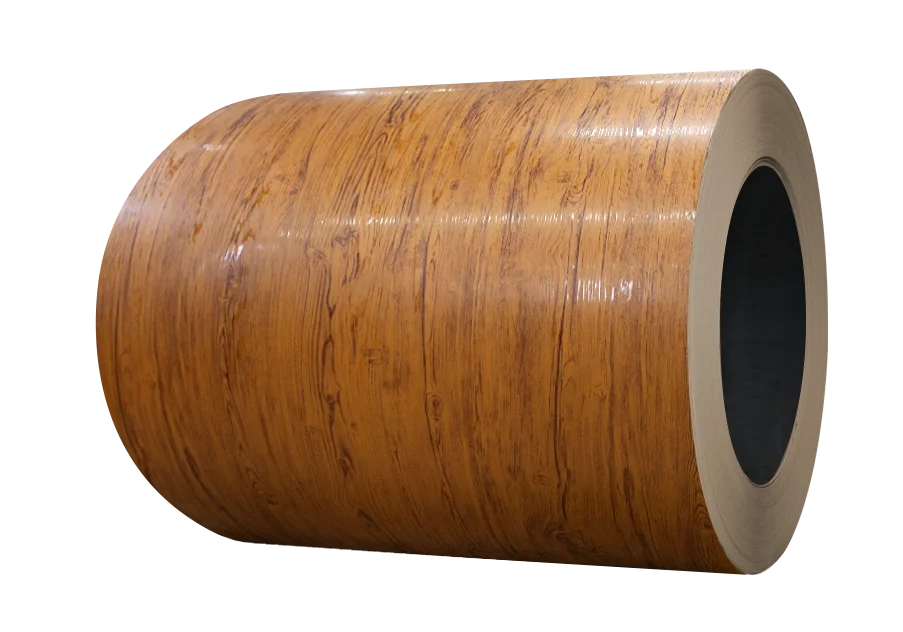
The topcoat can also be formulated to reproduce decorative effects. Examples of finishes that can be created on a stainless steel substrate include wood grain, marble, stone, brushed metal and solid colours.
Woda‘s pre-painted stainless steel product information illustrates this broader approach: the company describes specialised coatings applied to stainless steel substrates for plain colours and decorative patterns. Applications include roofing, wall cladding, fencing and interior design.
How Is Pre-Painted Stainless Steel Manufactured?
The manufacturing process generally begins with stainless steel sheet or coil that meets the specified grade, thickness, and surface requirements. The material is then cleaned and prepared before the coating system is applied under controlled production conditions.
A simplified production sequence is:
Stainless steel coil → cleaning → surface preparation → primer application → curing → topcoat application → curing → inspection → recoiling or cutting
Continuous coil coating can provide more consistent control than applying paint after the stainless steel has already been fabricated into individual components. Because coating takes place under controlled factory conditions, manufacturers can monitor coating thickness, curing conditions, surface appearance, and other parameters before the material reaches the fabrication stage.
This is particularly useful for large architectural projects where hundreds or thousands of panels need to maintain a consistent appearance.
What Determines the Performance of Pre-Painted Stainless Steel?
The finished performance depends on several variables rather than one specification.
- Stainless steel grade:
The alloy determines the underlying corrosion resistance, strength, formability, and suitability for the environment.
- Surface condition:
Cleanliness, roughness, and pretreatment influence coating adhesion.
- Primer system:
The primer provides the interface between metal and topcoat.
- Topcoat chemistry:
Resin selection affects UV resistance, hardness, flexibility, chemical resistance, and weatherability.
- Coating thickness:
Insufficient film thickness can reduce protection, while excessive thickness may create its own processing or appearance problems.
- Curing:
The coating must reach the appropriate curing conditions to achieve the intended film properties.
- Fabrication:
Bending, stamping, cutting, and forming after coating can create stress or damage if the material is not designed for post-coating processing.
For this reason, a product specification should define the complete coating system rather than simply stating “pre-painted stainless steel.”
Pre-Painted Stainless Steel vs. Ordinary Painted Steel
Pre-painted stainless steel should not be confused with pre-painted carbon steel or galvanized steel. The three materials may all receive an organic coating, but their substrates provide different properties.
Pre-painted carbon steel depends heavily on its coating system and, where applicable, metallic protection such as zinc. Pre-painted galvanized steel combines a steel substrate with a zinc layer and an organic coating. Pre-painted stainless steel instead starts with a stainless alloy whose chromium-containing passive surface provides inherent corrosion resistance.
This difference can be particularly important when a coating is scratched or locally damaged. The underlying behavior depends on the substrate, environmental conditions, and grade, so the design cannot be based solely on the visible coating.
| Material | Base Substrate | Main Protection Mechanism | Common Advantage | Typical Consideration |
| Pre-Painted Carbon Steel | Carbon steel | Organic coating and/or additional metallic coating | Cost efficiency | Substrate corrosion protection is highly dependent on the coating system |
| Pre-Painted Galvanized Steel | Zinc-coated steel | Zinc protection plus organic coating | Strong balance of cost and corrosion protection | Surface preparation and coating compatibility matter |
| Pre-Painted Stainless Steel | Stainless steel alloy | Passive stainless surface plus organic coating | Corrosion resistance combined with decorative flexibility | Higher substrate cost may be justified by performance and appearance |
The choice between these materials should therefore be based on the environment, expected service life, fabrication requirements, appearance and total project cost rather than material price alone.
What Are the Main Applications?
Pre-painted stainless steel is an attractive option where appearance and material performance are both important. It is used in a variety of architectural applications, including wall cladding, curtain wall elements, roofing components, ceilings, decorative panels, fencing and interior features.
Its design flexibility also makes it useful for commercial buildings, transport-related facilities, hospitality interiors, retail environments, and selected household products. Decorative finishes can mimic the appearance of wood, stone, and other materials, all the while retaining the characteristics of a metallic substrate.
This material is also useful when a project requires consistent factory-finished surfaces. Rather than painting individual panels on site, pre-painted coil or sheet can be supplied with a consistent surface finish and then fabricated according to project requirements.
What Should Buyers Check Before Purchasing?
A buyer should not specify pre-painted stainless steel only by color and thickness. A technically complete inquiry should identify the stainless steel grade, substrate thickness, surface finish, coating chemistry, coating thickness, color, gloss, pattern, dimensional tolerance, forming requirements, and required testing.
For exterior applications, weather resistance and color retention become particularly important. For interior applications, scratch resistance, cleaning behavior, appearance consistency and forming performance may receive greater emphasis.
It is also worth requesting coating samples before approving large production quantities. Color perception can change significantly depending on lighting, viewing angle, metallic effect, surface texture, and surrounding materials, so a digital color reference alone may not accurately represent the finished product.
Is Pre-Painted Stainless Steel Suitable for Outdoor Use?
Yes, it can be suitable for outdoor applications, but the correct combination of stainless steel grade and coating system must be selected for the actual environment. Coastal areas, industrial zones, high-humidity locations, and regions with strong UV exposure can impose very different requirements from protected indoor environments.
The substrate grade should be selected first according to the corrosion environment, while the coating should then be specified for the required weatherability and appearance retention. Selecting an expensive coating cannot compensate for choosing an unsuitable stainless steel grade for a highly aggressive environment.
Likewise, choosing premium stainless steel does not eliminate the need to specify an appropriate coating system when color retention, surface protection, or decorative appearance is important.
Final Takeaway: What Is Pre-Painted Stainless Steel Made Of?
Put simply, pre-painted stainless steel consists of a stainless steel alloy substrate and a controlled surface coating system. The stainless steel provides fundamental metallic properties and inherent corrosion resistance, while the coating system provides colour, decorative effects, and enhanced surface performance.
It is important to note that there is no single chemical composition for pre-painted stainless steel. Its composition depends on the grade of stainless steel and the coating technology selected for the application. The final performance depends on the interaction between the substrate, pretreatment, primer, topcoat, curing, and fabrication.
Therefore, for architects, fabricators and B2B buyers, the best specification is not simply ‘pre-painted stainless steel’. It should specify the required stainless steel grade, coating system, surface finish, colour or pattern, durability requirements and testing standards. This makes it easier to compare materials from different suppliers and substantially reduces the risk of selecting a product that looks right but does not meet the project’s actual service requirements.
FAQs About Pre-Painted Stainless Steel
- What is pre-painted stainless steel made of?
Pre-painted stainless steel consists of a stainless steel substrate covered by a coating system. The coating may include pretreatment, primer, and a colored or decorative topcoat.
- Is pre-painted stainless steel real stainless steel?
Yes, the substrate is genuine stainless steel manufactured to a specified grade. The paint is an additional surface layer and does not determine whether the underlying metal is stainless steel.
- What type of stainless steel is used for pre-painted stainless steel?
304 and 316 are common reference grades for architectural applications, while other grades can also be used depending on performance requirements. The appropriate grade should be selected according to the corrosion environment, forming requirements, and project specifications.
- What coating is used on pre-painted stainless steel?
Common coating technologies include polyester, modified polyester, polyurethane, and fluoropolymer-based systems such as PVDF. The appropriate coating depends on requirements such as UV resistance, color retention, scratch resistance, and outdoor durability.
- Is pre-painted stainless steel suitable for outdoor applications?
Yes, it can be used outdoors when the stainless steel grade and coating system are correctly matched to the environment. Coastal, industrial, and high-UV locations generally require more careful material and coating selection.
- What is the difference between pre-painted stainless steel and painted steel?
Pre-painted stainless steel uses a stainless steel alloy as its substrate, while ordinary painted steel generally uses carbon steel. The stainless substrate provides inherent corrosion resistance in addition to the protection and appearance provided by the coating.
Conclusion
Pre-painted stainless steel is a multilayer material, rather than just stainless steel with a decorative paint coating. The performance of the material is determined by the chemical composition of the stainless steel substrate, as well as by the surface preparation, primer, topcoat, and curing process.
When selecting the material, the grade of the stainless steel remains fundamental because the corrosion resistance and mechanical characteristics are determined by the presence of chromium, nickel, molybdenum, and other alloying elements. ASTM A240 shows that stainless steel should always be specified by grade and chemical requirements rather than being treated as a uniform material.
The coating system then determines much of the visible appearance and provides additional surface protection. This combination enables pre-painted stainless steel to bridge the gap between a high-performance metal substrate and architectural design. This makes it particularly useful for projects that require both long-term material performance and a controlled decorative finish.