

Quick Answer
For most outdoor applications, Galvalume steel offers better long-term corrosion resistance than galvanised steel in atmospheric conditions, particularly on large, undisturbed surfaces. However, galvanised steel may be the better choice in cases where cut-edge protection, severe forming, certain wet contact conditions or cost are the main considerations. Research on the atmospheric corrosion behaviour of Galvalume coatings, together with technical data from the GalvInfo Centre and ASTM specifications, shows that the aluminium-zinc coating provides substantial durability advantages in many environments by combining aluminium’s barrier protection with zinc’s sacrificial protection.
Therefore, the short answer is not simply “Galvalume is better”. Galvalume steel is generally the stronger choice for long-term roofing, cladding and other exposed sheet applications, while galvanised steel remains highly practical where fabrication, edge protection, availability and established processing requirements are more important.
Galvalume Steel vs. Galvanized Steel: What Is the Difference?
Both galvanized steel and galvalume steel are carbon steel products protected by a metallic coating. The fundamental difference between them is the chemistry of that coating, which determines how each material responds to moisture, oxygen, scratches, cut edges, heat, forming, and long-term exposure to the atmosphere.
Galvanised steel is coated primarily with zinc through a hot-dip process. ASTM A653/A653M-25 covers hot-dip zinc-coated galvanised sheet and specifies different steel grades and coating designations for various applications. Zinc provides two forms of protection for the underlying steel: it forms corrosion products that act as a barrier and, importantly, it can provide sacrificial galvanic protection when exposed steel is present.
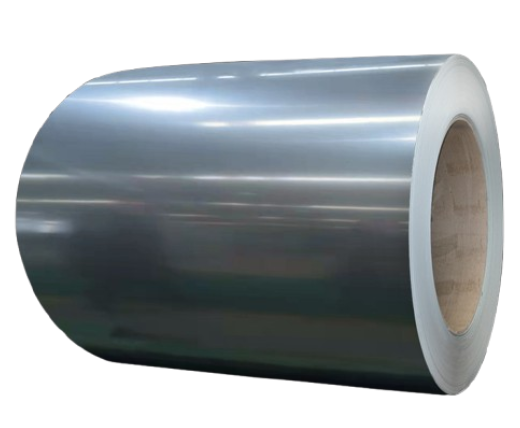
By contrast, Galvalume Steel uses a 55% aluminium-zinc alloy coating under ASTM A792/A792M. This coating consists of approximately 55% aluminium, 43.4% zinc and 1.6% silicon by weight, although the exact composition may vary slightly depending on the specification and terminology used. ASTM identifies A792/A792M as the standard specification for 55% aluminium-zinc alloy-coated steel sheet produced by the hot-dip process.
The engineering logic behind Galvalume is straightforward: aluminium provides a stable, protective barrier layer, while zinc offers sacrificial protection. The resulting coating therefore combines two different corrosion-protection mechanisms rather than relying predominantly on zinc alone. ASM International describes Galvalume as combining the corrosion resistance and heat-reflective properties of aluminium with the formability and galvanic protection of zinc.

Why Is Galvalume Usually More Corrosion Resistant?
Galvalume steel often lasts longer than galvanized steel because of the structure of its coating. The aluminium in the alloy develops a relatively stable oxide layer that slows down further environmental corrosion, while the zinc-rich regions remain available to provide sacrificial protection.
This creates a significant difference between the two materials. Galvanised steel relies heavily on the progressive consumption of its zinc coating, whereas Galvalume steel benefits from a more persistent barrier effect created by aluminium. Zinc is still important in Galvalume steel, but it is no longer the only major mechanism of corrosion protection.
Long-term atmospheric exposure research has repeatedly demonstrated this advantage. A study published in Materials Chemistry and Physics reported that Galvalume coatings can demonstrate atmospheric corrosion resistance approximately two to four times greater than that of conventional galvanized coatings under comparable conditions, depending on the environment and level of exposure.
Data compiled by the GalvInfo Centre provides an even more useful perspective. Comparative exposure testing of coatings of a similar thickness showed substantially lower average corrosion rates for a 55% aluminium-zinc coating than for a galvanised coating in rural, industrial and marine environments.
However, this does not mean that every Galvalume product will automatically outlast every galvanized product. The actual service life of a product is influenced by factors such as coating mass, substrate thickness, surface treatment, paint system, forming, installation details, environmental exposure and maintenance.
Galvalume vs. Galvanized: A Direct Performance Comparison
The following comparison provides a more useful way to evaluate the two materials than simply asking which one is “stronger.”
| Property | Galvanized Steel | Galvalume Steel |
| Main coating | Primarily zinc | Approximately 55% aluminum, 43.4% zinc, 1.6% silicon |
| Typical standard | ASTM A653/A653M | ASTM A792/A792M |
| Primary protection mechanism | Sacrificial zinc protection | Aluminum barrier + zinc sacrificial protection |
| Atmospheric corrosion resistance | Very good | Generally superior |
| Cut-edge protection | Excellent because zinc can provide sacrificial protection | Good, but localized edge behavior differs from flat-surface performance |
| Heat reflectivity | Moderate | High |
| High-temperature performance | Good within application limits | Generally better |
| Forming performance | Well established | Good, but forming practices matter |
| Common construction use | Roofing, framing, ducts, panels, general fabrication | Roofing, siding, cladding, panels, HVAC and exposed applications |
| Typical appearance | Zinc spangle or controlled surface | Fine metallic aluminum-zinc appearance |
| Best-known advantage | Reliable zinc sacrificial protection and fabrication familiarity | Long-term atmospheric corrosion resistance |
| Major consideration | Zinc gradually consumes during corrosion | Certain contact and forming conditions require careful specification |
ASTM’s current standards make an important point that is sometimes lost in commercial comparisons: these are not simply two grades of the same coating. A653/A653M and A792/A792M are separate specifications designed around different coating systems and application requirements.
Is Galvalume Better for Roofing?
Yes, in many roofing applications. Galvalume steel is a popular choice for roofing due to its strong atmospheric corrosion resistance and aluminium-based barrier protection, which are particularly beneficial for large exposed surfaces.
Roofing is a particularly suitable application for Galvalume steel because most of the panel surface is exposed directly to rain, humidity, sunlight, and changing temperatures. Over a long service period, slowing the corrosion rate of the metallic coating can significantly impact the panel’s appearance and functional life.
Galvalume also has good heat-reflective properties. The aluminium-rich surface reflects a significant portion of solar radiation, which can be useful in building envelope applications. However, actual building energy performance depends on the complete roof assembly, insulation, ventilation, colour, orientation, climate, and other design factors. U.S. Steel’s technical bulletin highlights roofs, siding, HVAC equipment, appliances, automotive underbody components, and higher-temperature applications as established uses for Galvalume sheet steel.
However, galvanized roofing should not be dismissed. It has a long history in building construction, is widely available and familiar to fabricators and installers, and provides strong sacrificial protection. In applications involving substantial forming or exposed cut edges, it can sometimes be the more practical choice.
Where Galvanized Steel Can Be Better?
The statement ‘Galvalume lasts longer’ can be misleading if interpreted as ‘Galvalume is always the better material’. The most suitable engineering choice depends heavily on how the steel will be fabricated and exposed.
One important consideration is the behaviour of cut edges and forming. Zinc is highly effective at providing sacrificial protection to exposed steel, including at scratches and cut edges. Galvalume also offers good edge protection, but its corrosion mechanism differs, as the aluminium-rich phase does not behave exactly like pure zinc.
Fabrication is another important consideration. Tight bends, punching, cutting, fastening and roll forming can alter the coating locally. Therefore, if the manufacturing process is aggressive, the best possible coating on the original flat sheet may not necessarily produce the best overall result after fabrication.
Galvanised steel may also be preferable if the specification, fabrication process, supply chain or installation method has already been developed around galvanised products. A material with slightly lower theoretical corrosion performance may still be the better commercial choice if it can be reliably and economically processed for the intended application.
Therefore, the correct approach is to evaluate the finished component rather than the coating on an untouched laboratory coupon.
Galvalume Is Not Ideal for Every Environment
Although Galvalume performs well in atmospheric conditions, it is not universally resistant to corrosion. Certain chemical exposures and contact conditions can alter the relative performance of Galvalume and galvanised coatings.
For instance, Galvalume specifications and industry guidance typically advise caution where the coated sheet will be in prolonged contact with wet concrete, certain treated wood products, copper, lead, or aggressive chemicals. Such conditions can produce corrosion mechanisms that are not represented by standard atmospheric exposure tests.
Marine exposure requires careful consideration beyond simply selecting the coating with the highest laboratory performance. Salt-laden environments can accelerate corrosion in both coating systems, while coastal construction introduces additional factors such as fastener selection, drainage, condensation, cut edges, trapped moisture, and salt deposits.
This is why a good specification should identify the actual environment, rather than just the generic category of ‘outdoor use’. Roofing panels in dry inland environments and those a short distance from the ocean may require very different coating, paint, fastening and maintenance strategies.
What About Prepainted Galvalume and Prepainted Galvanized Steel?
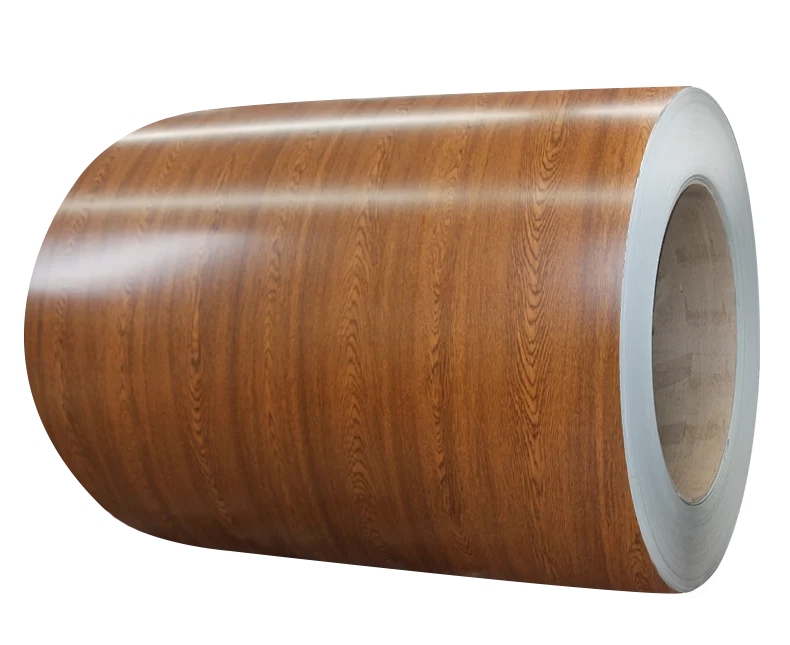
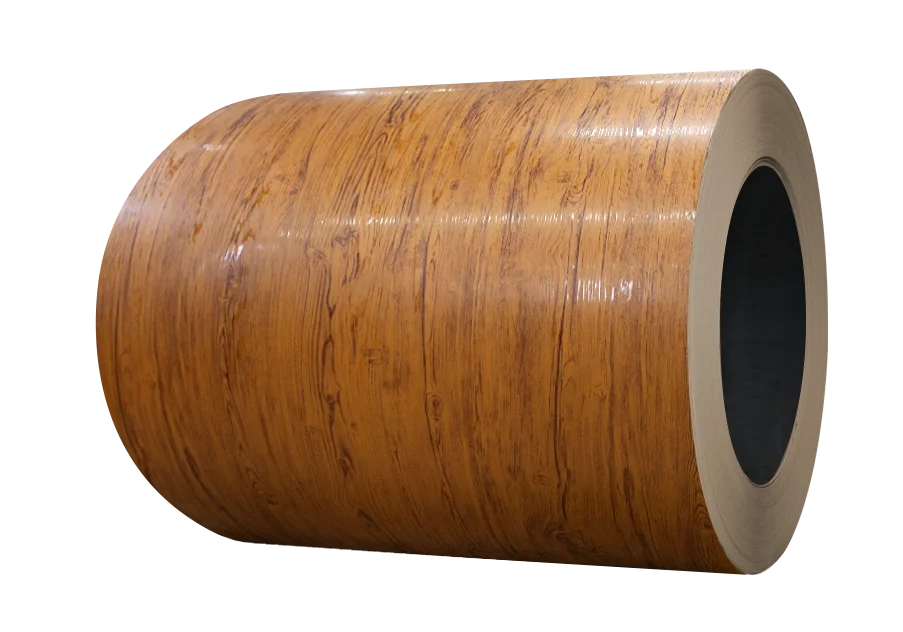
When it comes to many architectural and industrial applications, the real comparison is not between bare Galvalume and bare galvanised steel. The real comparison is between prepainted Galvalume steel and prepainted galvanized steel.
In a pre-painted product, the metallic coating provides primary corrosion protection, and the organic coating adds an additional protective and decorative layer. The paint system may include pretreatment, primer, topcoat and, in some cases, a backcoat or protective film.
Together, these create a combined protection system. If the paint remains intact, it reduces the metallic coating’s direct environmental exposure; if the paint is damaged, the metallic coating becomes important in limiting corrosion.
In my own product selection work with Woda, for example, I would not simply specify a prepainted steel product by saying “Galvalume is better”. First, I would match the substrate, coating designation, paint resin, coating thickness, forming requirement, application environment, and appearance requirement. Woda’s product range includes prepainted galvanised/Galvalume steel, as well as prepainted aluminium and stainless steel. This illustrates why the substrate should be selected as part of the complete coating system, rather than in isolation.
Galvalume Steel vs. Galvanized Steel: Which Is More Cost-Effective?
The cheapest material at the time of purchase is not necessarily the material with the lowest lifecycle cost. For long-life building components, corrosion performance, replacement intervals, maintenance, coating requirements, installation conditions, and expected service life should all be included in the calculation.
Galvalume can justify a higher initial material cost when its improved atmospheric corrosion resistance reduces long-term maintenance or replacement risk. This is particularly relevant for roofing and cladding, where replacing deteriorated panels can involve labor, access equipment, business disruption, and disposal costs in addition to the material itself.
Galvanized Steel can remain more economical when the exposure is relatively mild, when its coating designation is sufficient for the design life, or when its fabrication and procurement advantages outweigh the additional durability offered by Galvalume.
Therefore, price per ton is a poor standalone comparison. A better purchasing metric is cost per square meter over the intended service life, adjusted for coating performance and the consequences of premature corrosion.
How to Choose Between Galvalume and Galvanized Steel?
A practical material-selection process can be reduced to several questions.
- Where will the steel be used?
For exterior roofs, siding, wall panels, and exposed cladding, Galvalume deserves serious consideration because atmospheric corrosion resistance is often the primary concern. For general fabrication, framing, ducts, or components with different exposure conditions, galvanized steel may be entirely adequate.
- How aggressive is the environment?
Consider humidity, salt exposure, industrial pollutants, condensation, chemicals, temperature, and whether water can become trapped against the coating. The more aggressive the environment, the less appropriate it is to choose a material solely from a generic “GI vs. GL” comparison.
- Will the sheet be heavily formed?
Deep drawing, tight bending, punching, and roll forming can influence coating integrity. Specify the appropriate steel grade and coating designation according to the forming requirement rather than assuming that the same product is suitable for every fabrication method.
- Will the steel be painted?
If the final product is prepainted, the paint system may have as much practical importance as the metallic substrate. ASTM A755/A755M specifically addresses metallic-coated steel sheet that is subsequently prepainted by coil coating for exterior building products.
- What coating designation is required?
Do not compare “Galvalume” and “galvanized” without specifying the coating mass. ASTM A924 explains that metallic-coated sheet is supplied under different coating designations and that coating mass is generally expressed as the total coating on both surfaces.
| Selection factor | Choose Galvalume Steel when… | Choose Galvanized Steel when… |
| Long-term atmospheric exposure | Corrosion resistance is the main priority | Exposure is moderate, and zinc protection is adequate |
| Roofing/cladding | Long service life is important | Standard galvanized construction is acceptable |
| Heat exposure | Higher heat reflectivity or resistance is useful | Normal-temperature service is sufficient |
| Forming | Standard forming can accommodate the coating | Severe forming or established GI fabrication favors zinc |
| Cut edges | Overall flat-surface durability is prioritized | Strong sacrificial zinc behavior is especially valuable |
| Prepainting | PPGL performance is desired | PPGI is specified or commercially preferred |
| Procurement | Long-term performance justifies selection | Availability and established supply chain dominate |
| Lifecycle cost | Lower long-term corrosion risk is important | Initial cost and adequate design life are priorities |
What Standards Should Buyers Reference?
Professional procurement should avoid vague terms such as ‘high-quality Galvalume’ or ‘heavy galvanised coating’. Purchase specifications should identify the applicable standard, steel grade, coating designation, dimensions, mechanical properties, surface treatment, and inspection requirements.
ASTM A653/A653M is one of the principal references for galvanized sheet in North American specifications. The current edition of the ASTM standard covers zinc-coated and zinc-iron alloy-coated sheet in coils and cut lengths, and includes multiple steel categories and coating weights.
ASTM A792/A792M is the key reference for 55% aluminium-zinc alloy-coated sheet. ASTM states that this specification covers 55% aluminium-zinc alloy-coated steel sheet intended for applications requiring corrosion or heat resistance.
ASTM A924/A924M provides the framework for general hot-dip metallic-coated sheet requirements, used alongside the individual product specifications. The current version recognises several coating families, including zinc, 55% aluminium-zinc, aluminium and zinc-aluminium-magnesium coatings.
This standards-based approach is particularly important for international B2B purchasing, as terms such as GI, GL, galvanized, Galvalume, Aluzinc, Z275 and AZ150 can be used inconsistently by different suppliers and in different markets.
Final Verdict: Is Galvalume Better Than Galvanized?
For most exposed architectural and roofing applications, Galvalume steel is generally preferable to galvanised steel when long-term atmospheric corrosion resistance is the primary objective. Its 55% aluminium-zinc coating provides a combination of aluminium’s barrier protection and zinc’s sacrificial protection. Comparative exposure research has repeatedly demonstrated that it corrodes at a lower rate than conventional galvanised coatings under many atmospheric conditions.
However, ‘better’ does not mean ‘universally superior’. Galvanised steel remains an excellent engineering material offering strong sacrificial protection, proven fabrication performance, broad availability and a substantial installed base.
The most accurate conclusion is this: choose Galvalume steel for superior long-term atmospheric corrosion performance, especially for roofing, siding and exposed building panels. Choose galvanized steel when fabrication, cut-edge sacrificial protection, established specifications, availability, or the specific service environment make a zinc coating the more practical solution.
Ultimately, the decision should be based on the coating system, steel grade, coating mass, environment, fabrication, paint system, and expected service life rather than the Galvalume versus galvanized label alone.
Frequently Asked Questions
- Is Galvalume better than galvanized steel?
Galvalume Steel generally provides better long-term atmospheric corrosion resistance than comparable Galvanized Steel. Galvanized Steel can still be preferable where fabrication, edge protection, or specific environmental conditions favor zinc coating.
- Which lasts longer, Galvalume or galvanized steel?
Galvalume generally lasts longer on exposed flat surfaces under many atmospheric conditions. Actual service life depends on coating mass, environment, forming, installation, and maintenance.
- Is Galvalume more expensive than galvanized steel?
Galvalume can carry a higher material price depending on the market, coating designation, and supplier. Its longer corrosion life can nevertheless make it more economical over the full service period.
- Is Galvalume better for roofing?
Galvalume is often an excellent roofing substrate because of its strong atmospheric corrosion resistance and heat-reflective surface. Galvanized roofing remains a practical option when its coating designation and expected service environment are appropriate.
- What is the difference between Galvalume and galvanized steel?
Galvanized Steel is primarily protected with a zinc coating, while Galvalume Steel uses a 55% aluminum-zinc alloy coating with silicon. Galvalume therefore combines aluminum’s barrier protection with zinc’s sacrificial protection.
- Can Galvalume steel rust?
Yes, Galvalume Steel can eventually corrode and rust if the protective coating is sufficiently consumed or damaged. Its advantage is that the aluminum-zinc coating generally slows atmospheric corrosion more effectively than a comparable galvanized coating.
Conclusion
The question ‘Is Galvalume better than galvanised steel?’ has a clear but qualified answer. Galvalume steel is generally the better choice for long-term atmospheric corrosion resistance, while galvanised steel remains the better choice for certain fabrication and service conditions. This is due to their fundamentally different coating systems: zinc-dominant protection in galvanised steel versus a 55% aluminium-zinc alloy that provides both barrier and sacrificial protection in Galvalume steel.
For architects, contractors, steel distributors and B2B buyers, the strongest specification is not simply ‘GL’ or ‘GI’. It should include the steel grade, coating designation, coating mass, surface treatment, applicable paint system, forming requirements, exposure environment, and expected service life. This allows the material to be evaluated based on engineering performance rather than purchase price alone.