

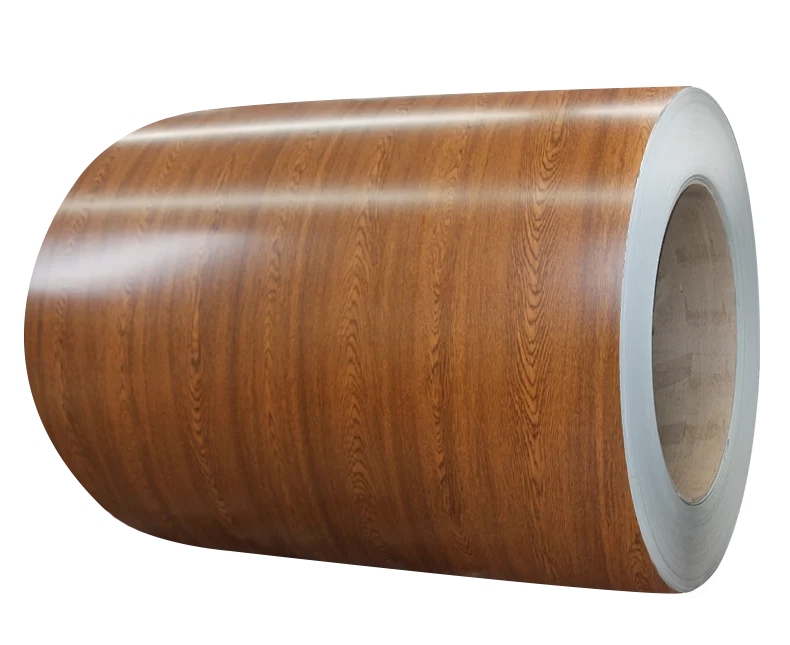
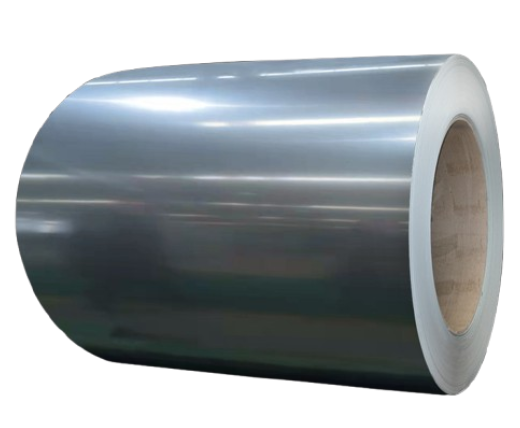
Quick Answer
The colour coating of pre-painted steel is applied to a steel substrate rather than a generic metal surface. In most construction applications, the substrate is hot-dip galvanised steel (GI) or aluminium-zinc alloy-coated steel (Galvalume/GL), although other metallic-coated steel substrates, such as cold-rolled steel, can also be used depending on the application and specification. ASTM A755/A755M covers pre-painted steel based on galvanised, aluminium-zinc alloy-coated, and aluminium-coated steel, while EN 10169 defines the substrate as rolled steel flat products, with or without a metallic coating.
What Is the Base Metal of Pre-Painted Steel?
The simplest answer is steel. However, when asked what base metal is used for pre-painted steel, the technically correct answer depends on the product specification and intended application: the paint can be applied to cold-rolled steel, galvanised steel, Galvalume steel, or another suitable metallic-coated steel substrate.
This distinction is important because the visible colour is just one part of a multi-layer material system. A typical pre-painted steel product may contain a steel core, a metallic coating such as zinc or an aluminium-zinc alloy, a chemical pretreatment layer, a primer and a coloured topcoat. Each layer performs a different function, meaning that the corrosion resistance and forming performance of the finished sheet cannot be judged from the paint colour alone.
ASTM A755/A755M describes pre-painted steel sheet as steel sheet that has been metallically coated and then coil-coated with organic films for exterior building products. Its material classification includes zinc-coated, aluminium-zinc alloy-coated, and aluminium-coated steel substrates.
In contrast, EN 10169 takes a broader view of continuously organic-coated steel flat products, defining the substrate as rolled steel flat products with or without a metallic coating. It also permits the selection of different steel substrate standards according to the application, as agreed between the manufacturer and purchaser.
Therefore, in response to the question, ‘What metal is pre-painted steel made from?’, the answer is typically ‘steel sheet or strip’, whereas a more useful question from a purchasing perspective is ‘What steel substrate and metallic coating are underneath the paint?’.

The Basic Layer Structure of Pre-Painted Steel
To understand why different substrates are used, it is helpful to consider the product from the inside out.
A conventional pre-painted steel panel can be represented as follows:
Steel substrate → metallic coating → pretreatment → primer → coloured topcoat → optional protective finish.
The steel substrate provides the mechanical foundation. It determines much of the sheet’s strength, ductility, thickness tolerance, forming behaviour, and suitability for fabrication.
When present, the metallic coating adds another level of corrosion protection. Zinc provides sacrificial protection to exposed steel, while aluminium-zinc alloy coatings offer a combination of barrier and sacrificial protection. The subsequent paint system then adds colour, weather resistance, additional corrosion protection and surface appearance.
Coil coating is performed continuously on steel strip rather than painting individual finished panels one by one. EN 10169 describes coil coating as a process involving surface preparation, one- or two-sided coating, and curing. This is one reason why pre-painted steel can achieve consistent coating quality across large production volumes.
This multilayer structure is one of the most important concepts for anyone purchasing pre-painted steel. The paint is not the only corrosion barrier, and the underlying steel is not necessarily bare carbon steel.
The Most Common Base Metal: Galvanized Steel
Hot-dip galvanized steel is the most familiar substrate for many construction-oriented pre-painted steel products. This combination is commonly referred to as PPGI (pre-painted galvanized iron/steel), even though the underlying material is galvanized steel.
The steel sheet undergoes zinc coating before entering the coil-coating line. During the prepainting process, the galvanised surface is cleaned and chemically prepared before primer and topcoat are applied. The resulting product combines the corrosion protection of the zinc layer with the decorative and protective properties of the organic coating.
ASTM A755 categorises galvanized steel as one of the main substrates for pre-painted exterior building products and refers to ASTM A653/A653M for the metallic-coated steel substrate.
Galvanised substrates are particularly common in roofing, wall cladding, siding, ceilings, fencing, garage components, doors and other fabricated building products. This popularity stems from an established supply chain and the complementary behaviour of zinc and paint: the metallic coating protects the underlying steel, while the organic coating minimises direct exposure to moisture and environmental contaminants.
However, specifying only ‘PPGI’ is insufficient for a technical purchase order. The buyer should also specify the steel grade, zinc coating designation or mass, nominal thickness, paint system, coating thickness, surface quality, forming requirements, and applicable product standard.
Galvalume Steel Is Another Important Substrate
The second major substrate is aluminium-zinc alloy-coated steel, which is commonly known as Galvalume or GL. Pre-painted Galvalume steel is often referred to as PPGL.
The difference is that the steel core is protected by an aluminium-zinc alloy coating rather than a zinc-based coating. ASTM A755 recognises aluminium-zinc alloy-coated steel as a substrate category for pre-painted exterior building products, and refers to ASTM A792/A792M for this type of metallic-coated steel.
Galvalume is particularly relevant in roofing and exterior building applications where long-term atmospheric exposure is a major consideration. The metallic coating provides a different corrosion-protection mechanism to that of conventional galvanized steel, and final performance depends on the combination of substrate, coating, paint system, forming method, environment, and edge condition.
Therefore, the choice between PPGI and PPGL should not be reduced to the question of which material is ‘stronger’. Both use a steel core, while their metallic coatings have different compositions and corrosion behaviours.
In coastal, industrial, high-humidity or otherwise aggressive environments, the substrate coating designation and paint system should be selected together, rather than choosing a colour first and asking the manufacturer to determine the construction afterwards.
Can Pre-Painted Steel Be Made from Cold-Rolled Steel?
Yes. Not all pre-painted steel requires a galvanised or Galvalume substrate.
Cold-rolled steel can also serve as the base material, particularly when the product’s forming requirements, surface appearance, dimensional precision, or application conditions render a metallic-coated substrate unnecessary, or when another corrosion protection strategy is employed.
EN 10169 specifically recognises continuously organic-coated steel flat products based on rolled steel substrates, with or without a metallic coating. The listed substrate standards include cold-reduced steel products, as well as metallic-coated products.
Cold-rolled steel has a relatively smooth surface and can provide an attractive foundation for organic coatings. However, it is important to note that, unlike galvanised or Galvalume steel, bare cold-rolled steel does not have the same underlying metallic sacrificial or barrier coating.
Consequently, the suitability of a cold-rolled substrate must be evaluated against the expected exposure environment and required corrosion resistance. A product intended for indoor decorative use may have very different requirements from one designed for decades of outdoor exposure.
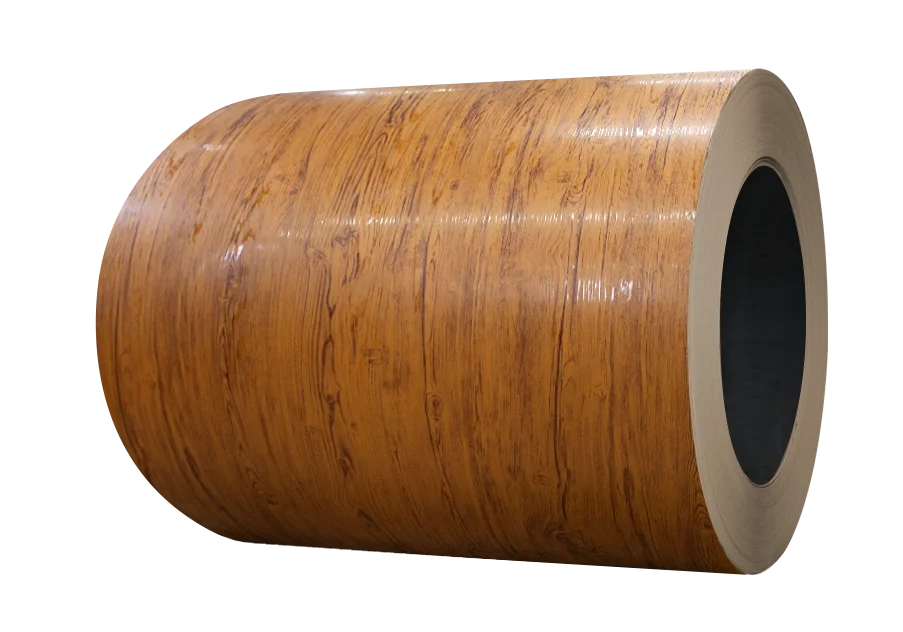
What Does the Paint Actually Do?
The paint on pre-painted steel serves more than just a decorative purpose. It forms a protective and decorative organic coating system.
A typical coil-coating system may include a primer and a topcoat on the side that is exposed, and a different back-coating system on the reverse side. ASTM A755 classifies this as a primer covered by one or more types and thicknesses of topcoat, whereas EN 10169 permits variations in coating arrangements according to the intended application.
The topcoat can be formulated using various resin technologies, including polyester, silicone-modified polyester, polyurethane, plastisol and fluoropolymer systems. However, these coatings are not interchangeable; their weathering resistance, flexibility, hardness, gloss retention, UV resistance, chemical resistance and expected service performance can differ significantly.
This is why two sheets with the same RAL colour can have completely different performance characteristics. Colour specifies appearance, while the substrate and coating system determine much of the engineering performance.
For instance, a white polyester-coated galvanised sheet and a white PVDF-coated Galvalume sheet may appear similar when new, but they are not equivalent products. Their substrate protection, resin chemistry, coating thickness, weathering performance and intended service conditions may all differ.
Pre-Painted Steel Is a Multi-Material System
A useful way to specify pre-painted steel is to stop thinking of it as “painted steel” and instead treat it as a layered engineered material.
| Layer | Typical Material | Primary Function |
| Base substrate | Cold-rolled or structural steel | Strength, stiffness, formability |
| Metallic coating | Zinc, aluminum-zinc alloy, etc. | Corrosion protection |
| Pretreatment | Chemical conversion layer | Improve coating adhesion and surface protection |
| Primer | Epoxy, polyester, polyurethane, etc. | Adhesion and corrosion resistance |
| Topcoat | PE, SMP, HDP, PVDF, PU, etc. | Color, weathering, and surface protection |
| Back coating | Polyester, epoxy or other coating | Back-side protection and fabrication support |
This layered construction explains why specifications should contain more information than simply “pre-painted steel, blue.” A technically complete inquiry should identify the substrate type, steel grade, metallic coating, paint technology, coating thickness, color, gloss or surface finish, forming requirements, and relevant standard.
For example, a specification based on ASTM A755 can identify a galvanized or aluminum-zinc alloy-coated steel substrate and an organic coating system. ASTM explicitly states that the properties of the substrate and organic coating system, together with the forming method, influence the service life and appearance of the finished product.
What Base Metal Should Be Used for Different Applications?
There is no single ideal substrate for every pre-painted steel application. The correct choice depends on whether the product will be exposed to rain, humidity, salt, chemicals, UV radiation, abrasion, or forming processes, or whether it will be used indoors.
For general construction roofing and wall cladding, galvanised steel and Galvalume are common starting points. For appliances and interior panels, the choice of substrate (smooth cold-rolled steel or metallic-coated steel) depends on appearance, forming, corrosion requirements and the manufacturing process.
For high-end exterior architecture, the paint system can be just as important as the metallic substrate. Steel of the same grade with different coating technologies can have substantially different resistance to UV degradation, chalking, colour change, corrosion and mechanical damage.
At Woda, when we select a pre-painted steel configuration, we treat the steel substrate, metallic coating, and organic coating as one coordinated system, rather than choosing the decorative colour independently. Our product range includes pre-painted galvanised/Galvalume steel, as well as pre-painted aluminium and stainless steel, reflecting the fact that the required substrate depends on the final application.
PPGI vs. PPGL: What Is the Difference?
One of the most common purchasing questions is whether PPGI or PPGL is better. The answer depends on the environment, required forming characteristics, coating specification, cost target, and expected service life.
PPGI uses galvanized steel as the substrate, while PPGL uses aluminum-zinc alloy-coated steel. Both can receive similar organic coating technologies, including polyester, modified polyester, polyurethane, and fluoropolymer systems.
| Characteristic | PPGI | PPGL |
| Full name | Pre-painted galvanized steel | Pre-painted Galvalume steel |
| Steel core | Steel | Steel |
| Metallic substrate coating | Mainly zinc | Aluminum-zinc alloy |
| Common application | Roofing, cladding, appliances, general construction | Roofing, cladding, exterior panels |
| Corrosion mechanism | Strong sacrificial zinc protection | Aluminum-rich barrier plus zinc contribution |
| Paint options | PE, SMP, HDP, PVDF and others | PE, SMP, HDP, PVDF and others |
| Main selection factor | Zinc coating + paint system | Alloy coating + paint system |
| Can it be roll formed? | Yes, when properly specified | Yes, when properly specified |
| Is one universally better? | No | No |
The important point is that PPGI and PPGL are not two different base metals. Both have a steel core; the difference lies mainly in the metallic coating applied to that steel before the organic paint system.
ASTM A755’s classification of galvanized and aluminum-zinc alloy-coated substrates provides a useful standards-based explanation of this distinction.
Does the Base Metal Affect the Color?
Indirectly, yes. The steel substrate itself is not usually chosen for its colour, as the visible colour primarily comes from the pigmented organic topcoat.
However, the substrate can influence the surface’s appearance, the adhesion of the coating, how easily it can be formed, and the coating’s long-term performance. Therefore, surface preparation is an important part of the coil-coating process.
A high-quality pre-painted steel line will typically clean and pretreat the substrate before applying the primer and topcoat. EN 10169 recognises the relationship between substrate characteristics, the coating system, flexibility, corrosion protection, UV resistance and the performance of the final product.
This is also why changing the substrate after the paint system has been selected can produce unexpected results. A coating formulation optimised for one substrate may require different pretreatment or process conditions when applied to another.
Does a Thicker Paint Coating Mean Better Pre-Painted Steel?
Not automatically. Although coating thickness is important, thicker does not necessarily mean better.
The performance of pre-painted steel depends on the interaction between the substrate, pretreatment, primer, topcoat chemistry, coating thickness, curing conditions, forming requirements, and environmental exposure. For example, a coating that is too thick for a particular forming operation may crack or behave differently during bending, and an inappropriate resin may perform poorly despite its nominal thickness appearing impressive.
EN 10169 enables purchasers to specify coating thickness and various performance requirements, including flexibility, corrosion, and UV resistance.
For this reason, professional buyers should compare complete coating systems rather than using paint thickness as the sole indicator of quality.
How to Specify the Base Metal When Buying Pre-Painted Steel
When purchasing pre-painted steel for a B2B project, a good specification should answer several questions before the supplier quotes the material.
- What is the steel grade?
The grade affects yield strength, tensile strength, elongation, and forming behavior. A roofing panel that will be roll-formed may require a different substrate grade from a rigid structural component.
- What metallic coating is required?
Specify whether the substrate is galvanized, Galvalume, zinc-aluminum coated, or another approved metallic-coated steel. The coating designation or mass should be stated rather than simply writing “corrosion-resistant steel.”
- What paint system is required?
Identify the resin family, such as PE, SMP, HDP, PVDF, or another specified system. For demanding exterior applications, UV and corrosion performance should be part of the specification.
- What is the required thickness?
The nominal steel thickness and coating thickness should be distinguished. A statement such as “0.5 mm pre-painted steel” may need clarification as to whether the dimension refers to substrate thickness or finished coated thickness.
- What environment will the product face?
Indoor, rural, industrial, coastal, high-UV, humid, and chemically aggressive environments can require very different coating systems. EN 10169 specifically connects coating performance requirements with intended exposure conditions.
Common Misunderstandings About Pre-Painted Steel
Misunderstanding 1: Pre-painted steel means bare steel painted directly
Not necessarily. Many pre-painted construction products have a metallic zinc or aluminum-zinc coating underneath the paint.
Misunderstanding 2: PPGI means the base metal is pure zinc
No. The structural base is steel, while zinc forms the metallic coating over that steel.
Misunderstanding 3: PPGL means the steel has been replaced by aluminum
No. PPGL still uses steel as the structural substrate; the difference is the aluminum-zinc alloy coating applied to the steel surface.
Misunderstanding 4: The color determines product performance
Color mainly identifies appearance. Resin chemistry, coating thickness, metallic coating, steel grade, pretreatment, and manufacturing quality are much more important for engineering performance.
Misunderstanding 5: All pre-painted steel products are equivalent
They are not. Two products can have identical colors and dimensions but significantly different substrates, coating systems, mechanical properties, and weathering performance.
FAQ: Pre-Painted Steel Base Metal
- What metal is used for pre-painted steel?
The base metal is steel, usually supplied as rolled steel strip or sheet. Depending on the product, it may be cold-rolled, galvanized, Galvalume, or another metallic-coated steel substrate.
- Is pre-painted steel the same as PPGI?
No, PPGI specifically refers to pre-painted galvanized steel. Pre-painted steel is a broader term that can include galvanized, Galvalume, cold-rolled, and other steel substrates.
- What is the base metal of PPGL?
PPGL has a steel core with an aluminum-zinc alloy metallic coating. The organic paint system is then applied over the prepared Galvalume surface.
- Can cold-rolled steel be pre-painted?
Yes, cold-rolled steel can be used as a substrate for continuously organic-coated steel. It is selected when its surface quality, dimensional accuracy, forming properties, or application requirements are suitable.
- Is galvanized steel better than Galvalume for pre-painted steel?
Neither is universally better because the appropriate substrate depends on the environment, forming process, coating specification, and required service life. Galvanized and Galvalume substrates use different metallic coating systems and should be compared according to the complete product specification.
- Does the steel substrate affect the color of pre-painted steel?
The visible color mainly comes from the pigmented organic topcoat rather than the steel itself. However, the substrate and surface preparation can influence coating adhesion, surface appearance, forming performance, and long-term durability.
Conclusion: What Type of Base Metal Is the Color of Pre-Painted Steel Applied To?
The most accurate answer is:
The colour coating of pre-painted steel is applied to a rolled steel substrate, which may be galvanised steel, Galvalume/aluminium-zinc coated steel, cold-rolled steel, or another approved metallic-coated steel. For construction-grade pre-painted steel, galvanised steel and Galvalume steel are two of the most common substrate choices. Both ASTM A755 and EN 10169 support this layered understanding of pre-painted steel.
In other words, the base metal is steel, with a protective metallic coating of zinc or aluminium-zinc usually applied to the steel, and the visible colour produced by the subsequent organic coating system.
This distinction is valuable when comparing pre-painted steel, PPGI, PPGL, colour-coated steel coil and painted metal sheet. Rather than asking only which colours or paints are available, buyers should evaluate the complete specifications, including steel grade, metallic coating, pretreatment, primer, topcoat, coating thickness and intended environment.
This is a more reliable way to predict forming behaviour, corrosion resistance, appearance retention and service life.