

Quick Answer
Neither laminate nor PVC is universally “better” or “worse”; the right choice depends on whether surface hardness and abrasion resistance or flexibility, moisture resistance, and forming capability are prioritised. Traditional high-pressure decorative laminate (HPL), which is covered by ANSI/NEMA LD 3, is a layered, resin-impregnated material designed for demanding decorative surfaces. In contrast, PVC laminate is a polymer-based film or sheet that offers greater flexibility and moisture resistance. When laminated onto aluminium or stainless steel, the metal substrate adds rigidity and dimensional stability to the decorative PVC surface.
Laminate vs PVC: The Difference Starts With What “Laminate” Means
Although the question ‘Which is better, laminate or PVC?’ sounds straightforward, it is often based on a misunderstanding of terminology. In the building materials and furniture industries, ‘laminate’ usually refers to high-pressure decorative laminate (HPL), whereas ‘PVC’ can refer to a PVC decorative film, a PVC laminate sheet, or a PVC-laminated metal product. While these materials may perform similar decorative functions, they are not constructed in the same way.
According to NEMA LD 3, HPL is a surfacing material made from papers, fabrics, or other core materials that are laminated under high pressure using thermosetting condensation resins. The standard covers performance characteristics relevant to actual use, including scratch, wear, impact, heat, and stain resistance; dimensional stability; and formability.
PVC laminate takes a different approach. It is essentially a polymer-based surface material, usually formed into a film or sheet, which is then finished with decorative printing, embossing, or protective coatings. As PVC is a thermoplastic material, it can be produced with varying degrees of flexibility and can mould to shapes that would be challenging for traditional rigid HPL.
This distinction is particularly important when discussing PVC laminated aluminium and PVC laminated stainless steel. In these products, the metal substrate is not replaced by the PVC; instead, the PVC film provides the visible decorative and protective surface, while the aluminium or stainless steel provides the underlying mechanical structure.
What Is Traditional Laminate?
Traditional laminate, particularly HPL (high-pressure laminate), is a layered engineered surfacing material. It is typically made up of decorative paper, kraft paper core layers impregnated with resin, and a protective surface layer, all of which are consolidated under heat and pressure. The resulting sheet is hard, dimensionally stable, and resistant to many forms of everyday wear and tear.
This construction explains why laminate remains widely used for countertops, desks, cabinets, commercial furniture, wall panels, and other high-contact applications. NEMA’s testing framework includes wear, scratch, impact, boiling-water, high-temperature, stain, and dimensional performance tests. This demonstrates that laminate should be evaluated as an engineered surface rather than simply for its decorative pattern.
The main limitation is structural rigidity. Standard laminate is best suited to relatively flat substrates and often requires an appropriate adhesive and supporting board or panel. While some specialised postforming grades can accommodate controlled bends, conventional HPL should not be treated as equivalent to a flexible polymer film.
What Is PVC Laminate?
PVC laminate is made from polyvinyl chloride rather than resin-impregnated paper. Depending on the product, it may consist of a PVC film or sheet, a decorative printed layer, and a protective coating. The manufacturing process involves extrusion, calendering, coating, printing, embossing, and film lamination.
The most important characteristics of PVC laminate are flexibility, moisture resistance, relatively low weight, and broad decorative versatility. These properties make it particularly useful for cabinet surfaces, wall panels, furniture wrapping, doors and decorative components, as well as applications where a continuous surface needs to follow edges or contours.
However, not every PVC-laminated assembly is automatically waterproof just because PVC is waterproof. The complete construction also includes the substrate, adhesive, seams, edges, and processing method. While a PVC film may effectively resist water, an exposed substrate edge remains vulnerable, so performance must always be assessed at the system level rather than from the polymer alone.

Laminate vs PVC: A Practical Performance Comparison
For buyers, the most useful comparison is not simply material composition but how each surface behaves under actual operating conditions. HPL generally emphasizes hardness, abrasion resistance, and dimensional stability, while PVC emphasizes moisture resistance, flexibility, appearance, and surface wrapping.
| Performance factor | Traditional laminate / HPL | PVC laminate | PVC Laminated Aluminum | PVC Laminated Stainless Steel |
| Basic structure | Resin-impregnated layered sheet | Polymer film or sheet | Metal substrate + PVC film | Stainless steel substrate + PVC film |
| Surface hardness | Generally high | Moderate to high, product-dependent | Depends on PVC film and metal system | Depends on PVC film and stainless substrate |
| Flexibility | Limited, except postforming grades | High | Good system rigidity with surface flexibility | High substrate rigidity |
| Moisture resistance | Good when properly installed | Very good | Very good with sound lamination and edges | Very good |
| Corrosion resistance | Depends on supporting substrate | PVC itself is corrosion-resistant | Metal substrate and film work together | Strong base-metal corrosion resistance plus film protection |
| Shape forming | Mainly flat or controlled bends | Suitable for wrapping/curves | Suitable for metal fabrication | Suitable for metal fabrication |
| Typical uses | Countertops, furniture, commercial interiors | Cabinets, panels, wrapping | Wall panels, ceilings, furniture, appliances | Decorative panels, appliances, interiors |
| Main selection driver | Wear and surface hardness | Moisture and flexibility | Lightweight metal + decorative finish | Durability + premium metal substrate |
The comparison shows why the question does not have one universal answer. If a manufacturer needs a very hard decorative work surface exposed to constant abrasion, HPL may be the more appropriate technology; if the application involves moisture, curved profiles, or wrapped edges, PVC may be more practical. When the requirement is a durable metal panel with a decorative polymer surface, PVC Laminated Aluminum or PVC Laminated Stainless Steel changes the comparison completely because the substrate contributes mechanical performance that a standalone PVC film cannot provide.
Why PVC Laminated Aluminum Is Different From Ordinary PVC?
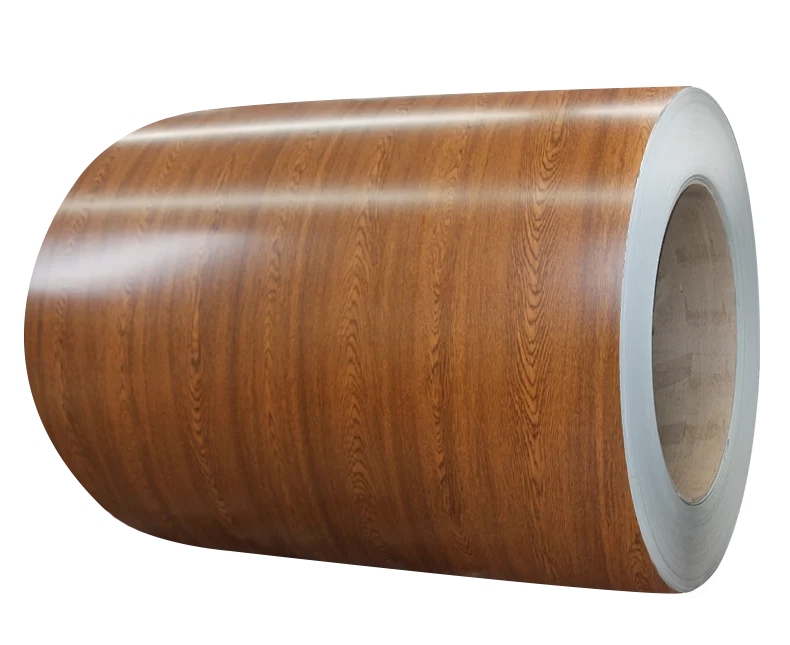
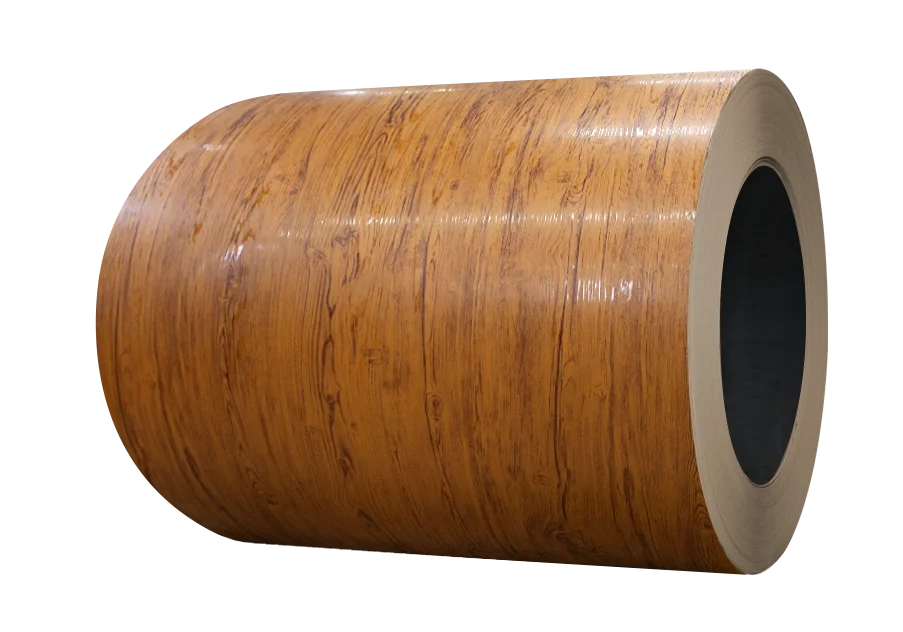
PVC laminated aluminium combines two materials with different functions. The aluminium provides a rigid yet lightweight base, while the PVC layer provides the visible finish, texture and colour, as well as an additional protective surface.
This combination is particularly useful when designers want a decorative appearance without compromising the fabrication characteristics of metal. The aluminium can be cut, formed and processed like a metal sheet, and the PVC surface can be made to look like wood grain, marble, solid colours, fabric textures and other decorative patterns.
Therefore, the practical advantage is not simply “PVC versus aluminium”. It is the combination of metal strength and polymer surface characteristics. Mitsubishi Chemical, for example, produces plastic-film-laminated metal sheets with galvanised steel, stainless steel and aluminium alloy substrates. They highlight applications in architecture, housing, commercial buildings, industrial facilities, and design, weather, and corrosion-related characteristics.
For interior architecture, furniture, appliance panels, ceilings and decorative wall systems, this hybrid construction offers a different balance to standalone HPL or PVC sheets.
PVC Laminated Stainless Steel: When the Substrate Matters More
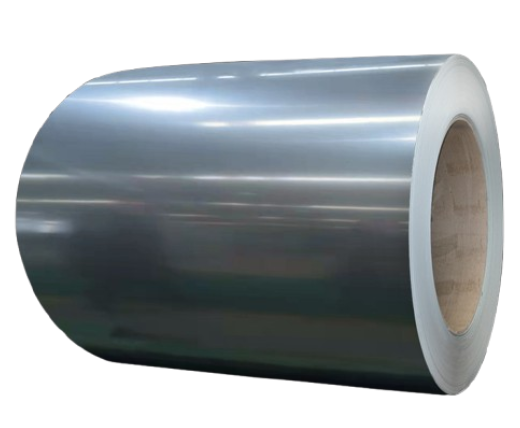
The principle behind PVC laminated stainless steel is the same, but it starts with stainless steel rather than aluminium. Stainless steel offers high rigidity and proven corrosion resistance, while the PVC surface allows for colour, texture, pattern and a more controlled decorative finish.
This is particularly relevant in applications where the underlying metal must withstand demanding environments, but where a warmer or more customised appearance than that provided by bare stainless steel is required for the final product. Examples of applications where this combination can make sense include appliance panels, interior decoration, doors, architectural components and specialised industrial surfaces.
Therefore, the distinction between PVC-laminated aluminium and PVC-laminated stainless steel is not primarily about the PVC itself. The choice is largely driven by the requirements of the substrate — weight, stiffness, the corrosion environment, forming requirements, magnetic behaviour, cost, and the desired finished appearance.
Where Should You Use Laminate and Where Should You Use PVC?
The best material becomes much clearer once the intended application has been defined. For high-contact horizontal surfaces, such as office desks, worktops, and commercial counters, surface hardness and abrasion resistance are usually more important than the ability to mould to complex shapes. This favours a properly specified HPL system.
PVC is a better option where moisture, cleaning, curved geometry or continuous decorative coverage is important. Examples include kitchen cabinets, bathroom furniture, wall panels, doors and wrapped furniture components, although the exact product specification still needs to be checked.
For architectural and industrial buyers, PVC-laminated metal may be a more suitable option than PVC laminate alone. PVC-laminated aluminium is lightweight and decorative, while PVC-laminated stainless steel retains the characteristics of a stainless steel substrate. Woda‘s product range, for instance, includes PVC-laminated aluminium, PVC-laminated stainless steel and PVC-laminated galvanised/galvalume steel. Applications are listed across wall cladding, ceilings, furniture, appliances, signage and interior decoration.
Durability: Do Not Confuse Surface Hardness With Overall Service Life
One of the most common mistakes when comparing laminate and PVC is to treat durability as a single property. For example, a surface may have excellent scratch resistance but perform poorly when repeatedly exposed to moisture. Alternatively, another surface may resist moisture very effectively but be more susceptible to indentation or surface damage.
NEMA LD 3 takes a multidimensional approach, separating wear resistance, scratch resistance, impact resistance, heat resistance, stain resistance, and dimensional behaviour into different tests. In other words, meaningful material comparisons require matching the test property to the actual failure mode expected during use.
PVC-laminated metal adds another layer to this analysis. The metal substrate provides structural rigidity, while the polymer film acts as the exposed surface. Therefore, the resulting product should be evaluated in terms of film adhesion, surface wear, forming performance, the substrate’s corrosion behaviour, edge treatment, and the environmental conditions of the finished component.
Long-term outdoor performance deserves particular attention. Research on PVC laminated to metal has shown that degradation behaviour can involve interactions between the polymer layer and the underlying metal. This illustrates why substrate chemistry and environmental exposure cannot be ignored when specifying a laminated metal product.
Appearance and Design Flexibility
Aesthetics are one area where the traditional assumption that “laminate looks better” or “PVC looks cheaper” has become increasingly unreliable. Modern decorative technologies allow both materials to reproduce wood, marble, stone, fabric, concrete, metal, and solid-color effects with different degrees of texture and gloss.
The more useful question is how the finish will be produced and what the surface needs to accomplish. HPL provides a dense decorative surface with established finish and performance classifications, while PVC film can be printed and embossed with highly varied patterns and can conform to profiles that rigid laminate cannot easily cover
PVC-laminated metal goes one step further by combining decorative flexibility with a metal substrate. It can therefore be considered when the project requires a decorative surface but also benefits from the rigidity, fabrication characteristics and dimensional behavior of a metal sheet.
Cost, Processing and Maintenance
Cost should be evaluated as total installed cost, rather than simply material price per square meter. HPL may require a supporting substrate, adhesive, machining, and edge treatment, while PVC film may require specialized wrapping or lamination equipment. PVC-laminated metal arrives as a composite material, which can simplify certain downstream finishing operations but introduces requirements for controlled lamination quality and film protection.
Processing is another important distinction. HPL fabrication commonly involves cutting, routing, drilling, bonding, and edge finishing, whereas PVC films can be wrapped or laminated around suitable surfaces. Metal-backed PVC products can be processed using metal fabrication techniques appropriate to the specific construction, although bending radii and film behavior must be considered to prevent cracking, delamination, or surface damage.
Maintenance is generally straightforward for both categories when the correct cleaning methods are followed. The key is to avoid assuming that a decorative film or laminate surface is immune to aggressive chemicals, excessive heat, impact, or abrasive cleaning simply because it is marketed as durable.
A Better Decision Framework for Buyers
Instead of asking “Which is better, laminate or PVC?”, procurement teams should ask five more specific questions:
- What is the substrate?
Is the surface MDF, plywood, aluminum, stainless steel, or another metal?
- What environment will it face?
Consider humidity, water exposure, UV exposure, temperature changes, cleaning chemicals, and indoor/outdoor use.
- What type of mechanical stress matters most?
Scratch, abrasion, impact, bending, indentation, and dimensional movement are different failure modes.
- Does the surface need to follow a shape?
Flat panels favor conventional laminate, while flexible PVC systems can be more appropriate for wrapped or curved components.
- What appearance and processing method are required?
Pattern consistency, embossing, gloss, texture, cutting, bending, and edge treatment can all influence the final selection.
| Application requirement | Material direction to investigate | Main reason | Critical qualification |
| High-wear countertop | HPL | Hard, wear-resistant decorative surface | Verify grade and heat/abrasion requirements |
| Office desk or commercial furniture | HPL | Strong everyday surface performance | Consider substrate and edge construction |
| Kitchen cabinet with shaped edges | PVC laminate | Flexible and moisture-resistant surface | Check heat and adhesive performance |
| Bathroom decorative panel | PVC laminate | Low water absorption and easy cleaning | Waterproof the complete assembly |
| Lightweight architectural panel | PVC Laminated Aluminum | Metal rigidity with decorative PVC surface | Verify film adhesion and forming radius |
| Premium metal decorative panel | PVC Laminated Stainless Steel | Stainless substrate plus customizable surface | Match grade to environment |
| Appliance exterior | PVC laminated metal | Decorative finish and cleanable surface | Check forming, heat, and chemical resistance |
| Curved furniture component | PVC laminate | Film can conform to profiles | Confirm film thickness and wrapping process |
Frequently Asked Questions About Laminate and PVC
- Is PVC laminate better than HPL?
PVC laminate is generally more suitable when flexibility and moisture resistance are priorities. HPL is often selected when surface hardness, abrasion resistance, and heavy-use performance are more important.
- What is the main difference between laminate and PVC laminate?
Traditional HPL is primarily a resin-impregnated layered decorative material. PVC laminate is a polymer-based film or sheet with different flexibility, moisture, and forming characteristics.
- Is PVC laminate waterproof?
PVC itself has very low water absorption and provides strong moisture resistance. However, the complete product still depends on the substrate, adhesive, seams, and edge treatment.
- Is PVC laminated aluminum better than ordinary PVC sheet?
PVC laminated aluminum combines a decorative PVC surface with a rigid aluminum substrate. It can therefore provide structural and fabrication advantages that a standalone PVC sheet does not provide.
- What is PVC Laminated Stainless Steel used for?
PVC Laminated Stainless Steel is used for decorative architectural panels, interior surfaces, appliances, doors, and other applications requiring a stainless-steel substrate with a customizable polymer finish. The exact application depends on the stainless grade, PVC film, and lamination specification.
- Which lasts longer, laminate or PVC?
There is no universal service-life winner because the dominant failure mechanism varies by application. HPL can be advantageous under heavy surface wear, while PVC-based systems can be advantageous where moisture and flexible forming are major requirements.
Conclusion
So, which is better: laminate or PVC? Neither material is universally superior. HPL laminate is generally used for hardness, wear resistance, and demanding flat-surface applications, while PVC laminate is used for moisture resistance, flexibility, decorative freedom, and shape conformity. When a project requires the properties of metal as well as a decorative polymer surface, PVC laminated aluminium and PVC laminated stainless steel should be considered as composite material systems rather than simply as alternatives to HPL.
Therefore, the most reliable specification for buyers is application-driven. First, define the substrate, environment, mechanical load, surface finish, forming method and expected service life, then select the laminate construction that satisfies these requirements. This approach is more useful than treating ‘laminate’ and ‘PVC’ as competing materials in isolation, and it also makes technical comparisons, supplier quotations, and quality inspections much easier to standardise.