

Quick Answer
Pre-galvanised steel is steel that has been coated with zinc before being fabricated, formed, or cut into its final component. This is most commonly achieved by hot-dip galvanising steel sheets or coils in a continuous process. The zinc layer provides the underlying steel with sacrificial corrosion protection, while products such as prepainted galvanized steel (PPGI) provide additional protection, appearance, and functional performance by applying a factory-controlled organic coating over the galvanized substrate. ASTM A653/A653M covers hot-dip zinc-coated steel sheet in coils and cut lengths, and specifies different steel grades and zinc-coating designations.
What Does Pre-Galvanized Steel Mean?
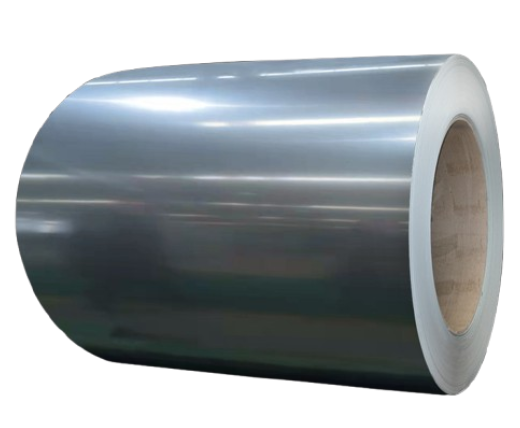
Pre-galvanized steel is steel that receives its zinc coating before being fabricated into the final product. In the most common sheet and coil applications, a steel strip passes through a continuous hot-dip galvanising line where the zinc coating is applied to the steel surface. The galvanised coil can then be slit, cut, roll-formed, stamped, bent or otherwise processed into finished components.
The word ‘pre’ is important because it indicates when the galvanising process occurs in the manufacturing sequence, rather than describing a different type of zinc coating. For instance, a steel sheet may undergo galvanisation first and then be roll-formed into a roofing panel, whereas another steel component may be fabricated first and then immersed in a zinc bath. This latter process is generally referred to as post-fabrication or batch hot-dip galvanising rather than as pre-galvanised steel.
ASTM A653/A653M is an important reference for galvanised sheet steel because it covers steel sheet produced by the hot-dip process in coils and cut lengths, whether it is coated in zinc or a zinc-iron alloy. The standard also recognises different steel grades, mechanical properties and coating designations. This means that ‘galvanised steel’ alone is not enough information for a technically complete purchasing specification.
This distinction is especially important for buyers when specifying prepainted galvanized steel, commonly known as PPGI. PPGI begins with a galvanized steel substrate to which a factory-applied organic coating is then added, usually through a continuous coil-coating process. In other words, the zinc-protection stage is pre-galvanizing, while prepainting adds another engineered surface system on top.
How Is Pre-Galvanized Steel Made?
The manufacturing process begins with a steel coil, which is usually made from cold-rolled steel when a controlled surface finish and precise dimensions are required. Rather than being individually dipped after fabrication, the strip is continuously processed through a galvanising line.
Before zinc is applied, the steel surface is cleaned to remove contaminants such as oil, dirt and oxides. This surface preparation is critical because the zinc must bond effectively to the steel substrate. The strip then passes through the molten zinc coating stage. The coating thickness is then controlled before the steel is cooled, inspected, and recoiled.
The resulting galvanized steel contains a steel substrate plus a protective zinc-based layer. The steel provides the required mechanical strength for the application, while the zinc coating provides corrosion protection. This division of functions is one of the fundamental reasons why galvanised steel is so widely used in construction, manufacturing, infrastructure and fabricated metal products.
When the galvanised coil is subsequently sent through a coil-coating line, additional layers can be applied. ArcelorMittal Dofasco describes prepainted steel as a steel coil that is painted before forming. The coil-coating process involves continuously cleaning, treating, priming, top-coating, curing, and recoiling the material.
The simplified material structure of prepainted galvanized steel can therefore be understood as follows:
Steel substrate → zinc coating → surface treatment → primer → topcoat.
Depending on the product and application, a back coating may also be applied. This layered structure demonstrates that PPGI cannot simply be described as ‘painted steel’. Its corrosion protection system begins with the galvanised metallic coating underneath the organic finish.
Why Does Zinc Protect Steel From Corrosion?
The main reason for galvanising steel is the protective effect of zinc against corrosion. Zinc provides barrier and sacrificial, or galvanic, protection.
As long as the zinc coating remains intact, it prevents the steel substrate from coming into contact with moisture, oxygen, salts, and other environmental factors that can accelerate corrosion. This physical barrier is the first level of protection.
The second mechanism becomes particularly important when the surface is scratched or damaged in other ways. Zinc is more electrochemically active than steel, meaning it can corrode preferentially and provide sacrificial protection to exposed areas of the underlying steel under suitable conditions. This is fundamentally different from ordinary paint, where a scratch can expose bare steel directly to the environment.
This is also why the weight or thickness of the zinc coating matters when specifying galvanised products. Generally, a heavier zinc coating provides a larger reservoir of sacrificial material, although the actual service life depends on the environment, coating quality, product geometry, exposure conditions, and other factors. ASTM A653/A653M recognises that different galvanized steels have different zinc coatings and does not treat them all as having an identical coating.
For PPGI, the zinc layer and organic coating work together to provide protection. The paint provides the visible finish and additional barrier protection, while the galvanised substrate remains an important corrosion-protection layer underneath.
What Is the Difference Between Pre-Galvanized Steel and Prepainted Galvanized Steel?
Although these two terms are closely related, they should not be treated as interchangeable.
Pre-galvanised steel has a zinc coating applied to it before it is fabricated. It can be supplied as a galvanised coil or sheet, which is then processed into the required component.
Pre-painted galvanised steel (PPGI) starts with galvanised steel, which is then given an organic coating before fabrication. The result is a material that combines the corrosion protection of zinc with the appearance and additional surface performance of a factory-applied paint system.
This distinction is particularly important for roofing, wall cladding, ceiling systems, garage doors, architectural panels, and other applications where the finished material requires both corrosion resistance and a decorative surface that can be controlled.
| Feature | Pre-Galvanized Steel | Prepainted Galvanized Steel (PPGI) |
| Basic substrate | Steel | Galvanized steel |
| Zinc coating | Yes | Yes |
| Organic paint coating | Normally no | Yes |
| Factory coating process | Continuous galvanizing | Galvanizing + coil coating |
| Main protection | Zinc corrosion protection | Zinc + organic coating system |
| Appearance | Metallic galvanized surface | Wide range of colors and finishes |
| Further fabrication | Cutting, bending, forming, etc. | Cutting, bending, roll forming, etc. |
| Typical applications | Framing, ducts, components, structural and fabricated parts | Roofing, cladding, panels, ceilings, doors, decorative metal |
| Main specification concerns | Steel grade, zinc coating, dimensions, mechanical properties | Substrate, zinc coating, paint system, color, coating thickness, forming performance |
The European coil-coating framework similarly treats prepainted metal as metal to which an organic coating material is applied through a coil-coating process, with the metallic substrate selected according to the required dimensional, mechanical, and corrosion properties.
What Does Prepainted Galvanized Steel Mean?
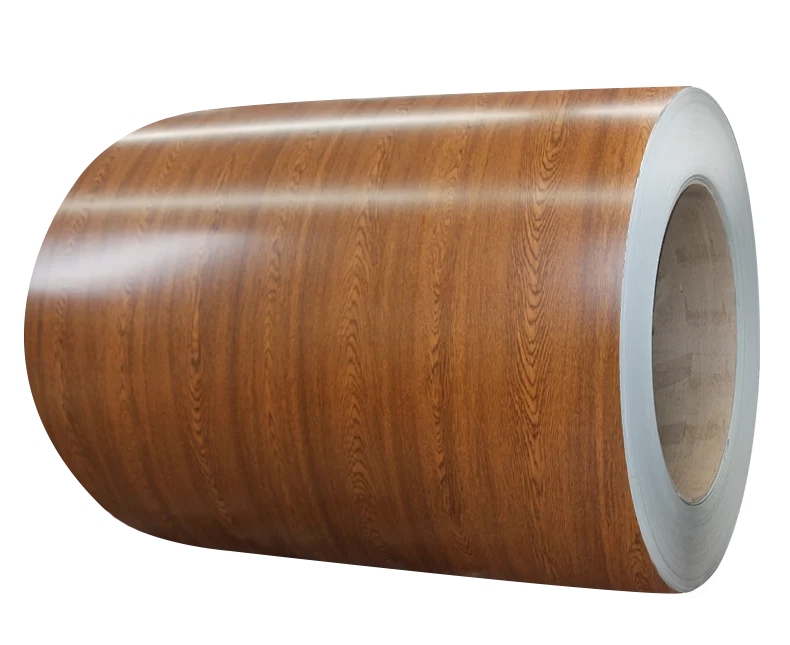
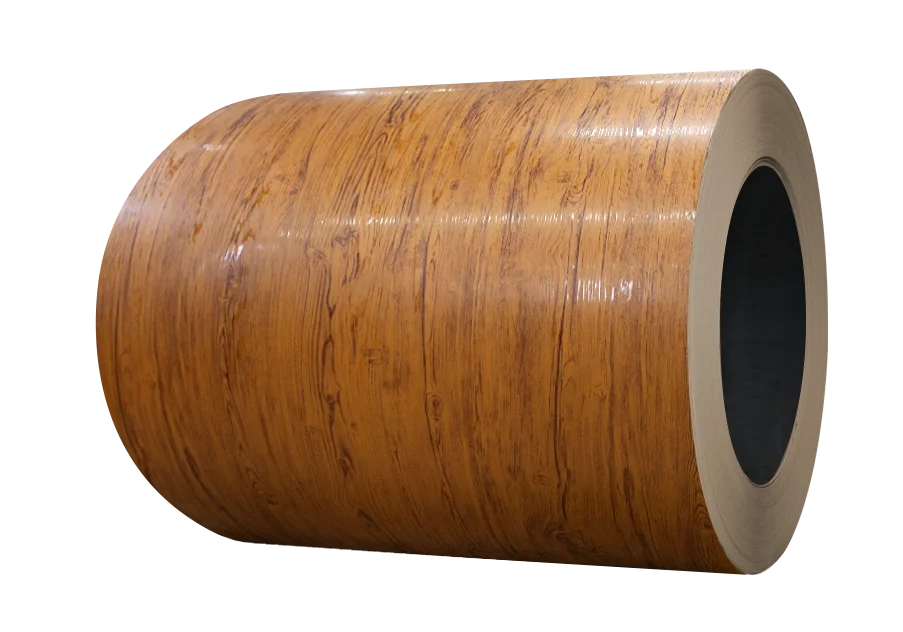
Pre-painted galvanized steel (PPGI) is galvanized steel that has been coated with an organic paint system in a factory before reaching the customer for further fabrication. It is also commonly referred to as pre-painted steel, pre-coated steel, or colour-coated galvanised steel.
The key word is ‘pre-painted ‘. Rather than fabricating a steel panel and then painting it, the steel coil is coated in controlled industrial conditions and delivered in finished coil or sheet form. Customers can then slit, cut, roll-form, press or otherwise fabricate the material into the final product.
This manufacturing sequence offers several practical advantages. The coating process can be tightly controlled in terms of film thickness, curing conditions, colour consistency, surface appearance and adhesion. ArcelorMittal describes coil coating as a continuous, highly automated process in which the steel is cleaned, chemically treated, primed, top-coated, cured and recoiled before fabrication.
The resulting PPGI product is therefore not just galvanised steel with an added decorative paint layer. It is a multilayer engineered material, with each layer performing a different role.
What Are the Main Coating Layers in PPGI?
A typical prepainted galvanized steel system consists of several functional layers. While the exact structure varies according to the manufacturer, coating system, substrate, and end use, the general architecture is relatively straightforward.
The steel substrate provides the mechanical foundation. Its grade determines characteristics such as yield strength, tensile strength, elongation, and formability, so it must be selected according to how the final product will be used, e.g., whether it will be roll-formed, bent, stamped, or used structurally.
The zinc coating provides metallic corrosion protection. Above this, a chemical pretreatment layer helps to create a suitable interface between the metallic coating and the organic paint system.
The primer improves adhesion and contributes to corrosion resistance, while the topcoat determines much of the visible appearance and provides properties such as weather resistance, colour retention, surface hardness, flexibility and resistance to the intended service environment.
A back coating may also be applied when the reverse side requires protection or the final component has specific forming or assembly requirements.
This layered approach is one of the most important concepts for anyone purchasing PPGI. A product should not be specified solely by its colour. Steel grade, zinc coating, paint type, coating thickness, surface finish, forming requirements and intended environment all influence actual performance.

What Paint Coatings Are Used on Prepainted Galvanized Steel?
The required balance of cost, appearance, durability, flexibility, chemical resistance, and weatherability determines which coating chemistry is selected. Common systems include polyester (PE), high-durability polyester (HDPE), silicone-modified polyester (SMP), and polyvinylidene fluoride (PVDF).
Standard polyester coatings are widely used in applications where general outdoor durability and cost efficiency are important considerations. These coatings are commonly found in roofing, wall panels, ceilings, doors, and general building products.
Higher-performance systems should be considered where stronger resistance to ultraviolet exposure, weathering, or challenging exterior conditions is required. PVDF, for instance, is often specified for architectural applications where long-term appearance and weather resistance are important.
Therefore, the correct coating should be selected according to the actual service environment, rather than simply choosing a coating based on its perceived sophistication. A material intended for an indoor ceiling, for example, has very different requirements from a roof exposed to strong sunlight, humidity, industrial pollutants, or coastal salt.
At Wofeng, we treat the galvanized substrate, coating system, forming requirements, and final application as connected specification decisions when discussing prepainted galvanized steel with buyers, rather than selecting a paint colour in isolation. Wofeng’s published product information shows that its range of prepainted metals includes galvanised and Galvalume steel substrates, as well as different decorative and functional coating solutions.
What Are the Advantages of Prepainted Galvanized Steel?
The main advantage of PPGI is that it combines the structural integrity and corrosion resistance of galvanised steel with the aesthetic appeal and surface functionality of a factory-applied coating.
Firstly, the factory coating provides a more consistent finish than conventional on-site painting. The continuous coil-coating process enables manufacturers to control the application and curing of the coating under consistent production conditions. This is particularly useful when colour consistency and repeatability are important for large quantities of panels.
Secondly, PPGI can eliminate the need for further painting after fabrication. The material arrives with the surface finish already in place, enabling downstream manufacturers to focus on cutting, forming, assembly and installation.
Thirdly, PPGI offers considerable design flexibility. Different colours, gloss levels, patterns, textures and coating systems can be specified for architectural and commercial applications. This is one reason why prepainted steel has expanded well beyond traditional industrial roofing.
Fourthly, the zinc substrate provides an additional corrosion-protection mechanism beneath the organic coating. These two systems complement each other rather than being redundant: the paint primarily acts as an exterior barrier and decorative finish, while the zinc provides metallic corrosion protection.
Finally, PPGI is compatible with high-volume industrial processing. Coil products can be slit, cut, roll-formed, profiled, stamped, and fabricated into finished components, making them ideal for standardised manufacturing processes.
Where Is Prepainted Galvanized Steel Used?
PPGI is particularly common in applications where a material needs to be weather-resistant, aesthetically pleasing, easy to form, and efficient to manufacture.
In construction, it is widely used for roofing sheets, wall cladding, sandwich panels, ceiling systems, architectural panels, doors, shutters, and building accessories. Pre-painted steel is also used for garage doors, ceiling grid systems, containers and appliances. ArcelorMittal specifically identifies roofing and cladding, residential and garage doors, ceiling grid systems, containers and major appliances as applications for prepainted steel.
The material is also suitable for decorative architectural applications where standard galvanised finishes may not achieve the desired visual effect. Patterned and wood-grain finishes allow steel to imitate other materials while retaining the manufacturing advantages of coated metal.
However, the environment should always be considered when selecting an application. A standard PPGI product that is suitable for an ordinary inland building should not be assumed to perform in the same way in a highly corrosive coastal or industrial atmosphere. The following factors should be reviewed together: substrate selection, zinc coating, paint chemistry, coating thickness, and maintenance expectations.
How Should Buyers Specify Prepainted Galvanized Steel?
One of the most common mistakes in procurement is to request ‘PPGI’ without providing sufficient technical information. While PPGI identifies the general product category, it does not define the complete performance specification by itself.
A professional enquiry should normally establish the intended application first. Different combinations of substrate grade, coating system, thickness, and surface performance may be required for roofing, wall cladding, ceiling panels, appliance components, doors, and decorative panels.
The steel grade is particularly important when the material will be formed. For example, a roofing profile may require different formability characteristics than a structural component or a deeply formed appliance part.
Buyers should also distinguish nominal thickness from coating thickness. The zinc coating and organic paint system are separate parts of the product structure, and specifications should make clear what is being measured and according to which standard.
| PPGI specification | Why it matters |
| Steel grade | Determines strength, elongation, and forming behavior |
| Base-metal thickness | Influences structural performance and finished-product dimensions |
| Zinc coating designation | Determines the amount of metallic zinc protection |
| Paint type | Influences weathering, flexibility, durability, and cost |
| Topcoat thickness | Affects appearance and surface performance |
| Back-coat specification | Important for reverse-side protection and fabrication |
| Color / RAL reference | Controls the required visual appearance |
| Surface finish | Determines gloss, texture, pattern, or decorative effect |
| Coil width | Must match downstream slitting or forming equipment |
| Coil weight / ID / OD | Affects handling, production, and line compatibility |
| Forming requirements | Determines whether the coating and substrate can withstand fabrication |
| Applicable standard | Establishes the testing and acceptance framework |
| End-use environment | Guides coating and substrate selection |
ASTM A653/A653M is particularly relevant to the galvanized substrate because it specifies zinc-coated steel sheet and different coating designations and steel categories. The finished PPGI product, however, may also need additional requirements for the organic coating system, testing, color, surface performance, and applicable regional standards.
Pre-Galvanized Steel vs. Post-Galvanized Steel
The difference between pre-galvanised and post-galvanised steel becomes clearer when you consider the production sequence.
With pre-galvanised steel, the sheet or coil is galvanised first and then fabricated. Depending on the process, geometry, and final product design, cutting, punching, or forming may expose small areas of uncoated steel.
With post-galvanised steel, the component is fabricated first and then galvanised. Therefore, the zinc coating is applied after the final component geometry has been established.
Neither process is automatically ‘better’. The correct choice depends on the component’s geometry, the required coating coverage, the manufacturing process, the dimensional tolerances, the corrosion environment and the applicable specifications.
For flat steel sheets and coils used in roofing and panel production, however, continuous galvanising followed by prepainting is particularly efficient, as both coating stages can be integrated into a controlled industrial supply chain before the material reaches the fabricator.
Is Prepainted Galvanized Steel Better Than Galvanized Steel?
Not necessarily in every application, but PPGI provides capabilities that bare galvanized steel does not. Galvanized steel is often the better choice when a metallic zinc finish is acceptable, and the primary requirement is corrosion protection combined with economical fabrication.
PPGI becomes more attractive when appearance, color consistency, additional barrier protection, or reduced post-fabrication painting requirements are important. The organic coating also gives designers significantly more freedom than the conventional metallic appearance of galvanized steel.
The choice should therefore be based on application requirements rather than a simple “better or worse” comparison. For an industrial component hidden from view, paying for a decorative topcoat may offer little value; for an architectural façade, the additional coating system may be central to the product’s purpose.
FAQ: Prepainted Galvanized Steel
- What does pre-galvanized steel mean?
Pre-galvanized steel is steel that receives a zinc coating before it is fabricated into the final component. Continuous hot-dip galvanized steel sheet and coil are common examples covered by ASTM A653/A653M.
- What is the difference between pre-galvanized and hot-dip galvanized steel?
Pre-galvanized steel is generally galvanized in sheet or coil form before fabrication, while post-fabrication hot-dip galvanizing immerses the completed component in molten zinc. The manufacturing sequence affects coating coverage, dimensions, fabrication, and suitability for different applications.
- What is Prepainted Galvanized Steel?
Prepainted Galvanized Steel, or PPGI, is galvanized steel that receives a factory-applied organic coating before further fabrication. It combines zinc-based corrosion protection with color, appearance, and additional surface protection.
- Is PPGI better than galvanized steel?
PPGI is advantageous when color, appearance, additional barrier protection, and factory-controlled coating are required. Plain galvanized steel may be more economical when decorative coating is unnecessary.
- What is PPGI mainly used for?
PPGI is widely used for roofing, wall cladding, sandwich panels, ceilings, doors, shutters, architectural panels, appliances, and other fabricated products. The appropriate coating system should be selected according to the service environment and forming requirements.
- How do you choose the right PPGI?
Specify the steel grade, thickness, zinc coating, paint system, coating thickness, color, surface finish, dimensions, applicable standard, and intended application. For demanding outdoor environments, the coating system and corrosion conditions should be evaluated together rather than selecting the product based only on price or color.
Conclusion
So, what does ‘pre-galvanised steel’ mean? Put simply, it is steel that has been coated in zinc before fabrication, typically in the form of galvanised sheet or coil. The zinc provides corrosion protection to the underlying steel in two ways: as a barrier and as a sacrificial element. Meanwhile, the steel substrate provides the mechanical properties required for subsequent forming and use.
Prepainted galvanized steel takes this concept one stage further. The galvanised steel substrate is passed through a controlled coil-coating process in which layers of pretreatment, primer and paint are applied and cured before fabrication. The resulting PPGI product combines the corrosion protection characteristics of galvanised steel with colour, appearance, coating performance and manufacturing convenience.
The most important point for buyers is that ‘PPGI’ is a product category, not a complete specification. To make a reliable purchasing decision, consider the following: steel grade; base-metal thickness; zinc coating; paint chemistry; coating thickness; surface finish; forming requirements; environmental exposure; and applicable standards. ASTM A653/A653M provides an important reference point for the galvanised steel substrate, while the organic coating system must be specified according to the required end-use performance.
When these factors are correctly matched, prepainted galvanized steel offers a practical combination of corrosion protection, formability, appearance, production efficiency, and application flexibility. This explains its continued importance in modern roofing, cladding, architecture, industry and appliance manufacturing.